
Planning a trip to Seoul, Busan or Jeju starts with one question: do you need a South Korea tourist visa, or can you simply board a plane? The answer depends entirely on your nationality. South Korea offers visa-free entry to citizens of more than 60 countries and territories, while travellers from many other nations — including India, China, Vietnam and the Philippines — must apply for a short-term visit visa before departure.
This guide explains who needs a South Korea tourist visa in 2026, who travels visa-free, and the exact documents, fees and steps involved, along with two entry rules that often confuse first-time visitors: the K-ETA and the new e-Arrival Card.
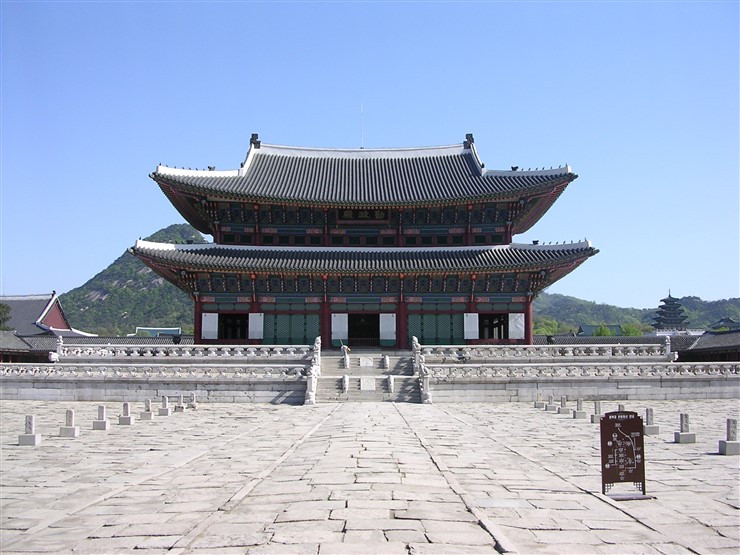
Do You Need a South Korea Tourist Visa?
The first thing to confirm is your entry track, because it shapes everything else. South Korea sorts short-term visitors into two broad groups: those who can enter visa-free for tourism, and those who must obtain a South Korea tourist visa in advance. Your passport — not where you live or where you fly from — decides which group you fall into.
Visa-free entry and the 90-day rule
Citizens of around 60 countries and territories can enter South Korea for tourism without a visa, including Japan, the United States, the United Kingdom, Canada, Australia, Singapore and most EU nations. The permitted stay varies by nationality — commonly 30, 60, 90 or 180 days — with 90 days being the typical allowance for tourism and short business visits. Visa-free entry is strictly for non-paid activities such as sightseeing, visiting family, and attending meetings or events. If your country is not on the visa-free list, you cannot enter on arrival; you must apply for a South Korea tourist visa at a Korean embassy, consulate or authorised visa application centre.
Whether your passport grants visa-free entry is part of a wider mobility picture — you can see how nations compare in our 2026 passport rankings.
Transit through South Korea
If you are only changing planes and stay within the international transit area for less than 24 hours, you generally do not need a transit visa. Some travellers can also use South Korea’s transit tourism schemes to leave the airport briefly. Rules differ by nationality and route, so confirm with your airline and the consulate if you intend to leave the transit zone, and never assume a layover automatically permits entry into the country.
K-ETA and the 2026 exemption
Visa-free nationals would normally need a K-ETA (Korea Electronic Travel Authorization) — an online pre-travel approval — before flying. However, the South Korean Ministry of Justice has temporarily waived the K-ETA requirement for eligible visa-free countries, and this exemption has been extended through 31 December 2026 to support inbound tourism.
In practice, this means that until the end of 2026 eligible visa-free travellers can board without applying for a K-ETA at all. They may still choose to apply voluntarily — the fee is about 10,000 KRW (roughly US$8) — because an approved K-ETA exempts the holder from completing the e-Arrival Card on entry. Any K-ETA already issued stays valid until its own expiry date. Two cautions: the exemption applies only to countries already on the K-ETA-eligible list, and that list is updated periodically, so confirm your status on the official K-ETA site close to your travel date.
The e-Arrival Card
Since 2025, South Korea has been replacing the paper arrival card with an online e-Arrival Card, submitted up to three days before arrival (including the day you land). Travellers who hold an approved K-ETA are exempt from the e-Arrival Card, as are registered residents of Korea. Everyone else who is not going through the K-ETA process — including visa holders and visa-exempt travellers without a K-ETA — is expected to complete it. It is free, takes a few minutes, and you should save the confirmation to show at immigration. Note that the e-Arrival Card is an entry declaration, not a visa, and does not by itself grant entry.
South Korea Tourist Visa Types (C-3)
Short-term visits fall under the C-3 (Temporary Visit) category, which covers stays of 90 days or less for tourism, family visits, events, training and non-paid business activities. The C-3 visa cannot be used for any profit-making work; if you will be paid for your skills or services, a different visa category applies. Within C-3, several subcategories exist:
| Subcategory | Purpose |
|---|---|
| C-3-1 | Short-term general – conferences, events, business meetings and consultations |
| C-3-2 | Group tourism, including group e-visa holders |
| C-3-9 | General short-term tourism – the standard South Korea tourist visa |
For most leisure travellers, the relevant category is the C-3-9 short-term tourist visa. It is generally issued as a single-entry visa, valid for three months from issue, and permits a stay of up to 90 days. Applicants with a strong travel history may sometimes be granted double- or multiple-entry visas at the discretion of the issuing mission. Always check the entry type, validity dates and permitted stay printed on your visa before travelling, as these can vary between consulates.
Documents Required for a South Korea Tourist Visa
Requirements are broadly consistent worldwide, though each consulate can ask for extra papers. A typical South Korea tourist visa application includes:
- A passport valid for at least six months beyond your intended stay, with at least two blank pages.
- The completed visa application form (the e-form generated on the Korea Visa Portal, printed and signed).
- One recent colour photograph, usually 35 x 45 mm on a white background.
- Proof of accommodation and a return or onward flight reservation.
- A travel itinerary covering your dates in Korea.
| Document | Notes |
|---|---|
| Valid passport | At least 6 months validity beyond stay; 2 blank pages |
| Visa application form | e-form from Korea Visa Portal, printed and signed |
| Photograph | One recent colour photo, usually 35 x 45 mm, white background |
| Accommodation proof | Hotel booking or host details |
| Flight reservation | Return or onward ticket |
| Travel itinerary | Covering your dates in Korea |
| Bank statements | Often last 6 months, stable balance |
| Proof of employment / occupation | Employment letter, business registration, or student letter |
| Income-tax records | Where applicable (e.g. 2 years ITR for India) |
Financial documents
Consulates want to see that you can fund your trip and that you intend to return home. Commonly requested items include:
- Personal bank statements, often covering the last six months.
- Proof of employment or occupation — an employment letter, business registration, or for students a school or college letter.
- Recent salary slips for salaried applicants; business and tax records for the self-employed.
- Income-tax records where applicable — for example, Indian applicants are typically asked for two years of ITR.
There is no universal published minimum bank balance, but a steady balance proportionate to your trip length, with regular income credits, is viewed more favourably than a large, sudden deposit made just before applying.
Extra documents for specific situations
- Visiting family or friends: an invitation letter, the host’s ID or residence proof, and proof of relationship.
- Minors travelling: birth certificate and parental consent.
- Sponsored trips: the sponsor’s financial documents and a letter explaining the relationship.
South Korea Tourist Visa Fees
Korean visa fees are set by each mission on a reciprocity basis, so the same C-3-9 visa can cost very different amounts depending on where you apply. A handful of nationalities — such as Japan, Taiwan, Spain and Italy — are fully fee-exempt. The figures below are indicative; confirm the exact amount for your nationality before paying.
| Visa / item | Typical fee |
|---|---|
| C-3-9 single entry | About US$40 (varies by mission) |
| C-3-9 double entry | About US$70 |
| C-3-9 multiple entry | About US$90 |
| India: C-3-9 single entry | Rs 3,400 (revised 1 June 2025) |
| India: visa centre service charge | About Rs 1,100 (BLS / VFS) |
| Voluntary K-ETA (visa-exempt nationals) | About 10,000 KRW (about US$8) |
Group travellers should note that South Korea has waived the C-3-2 group tourist visa processing fee for groups from India, China, Vietnam, the Philippines, Indonesia and Cambodia through 30 June 2026. Visa fees are non-refundable, even if an application is denied.
How to Apply for a South Korea Tourist Visa
If your nationality requires a visa, the process is straightforward but document-heavy. The general steps are:
- Confirm your visa type. For leisure travel this is almost always the C-3-9 short-term tourist visa.
- Complete the application form online on the Korea Visa Portal, then print and sign the generated e-form with its barcode.
- Gather your documents using the checklist above, plus any extras your local consulate lists.
- Book an appointment at the relevant embassy, consulate or authorised visa application centre (such as VFS Global or BLS International in India). Biometric data, where required, is collected in person.
- Submit your application and pay the visa fee and any service charge. Keep the receipt and tracking reference.
- Track your application and collect your passport, verifying the visa details — type, entry, validity and permitted stay — before you leave the counter.
Indian and several other nationalities receive a physical sticker visa in the passport rather than an e-visa, so plan for the extra document-handling time involved.
Processing Time and Approval
Standard processing for a South Korea tourist visa is around 10 working days from submission and can stretch during peak periods — roughly April to June, the year-end, and around Lunar New Year. Express processing of 5 to 7 working days is offered at some centres, though it has been suspended at certain Indian centres, so check current availability before relying on it. Apply at least three to four weeks ahead, and avoid applying more than three months before travel, since a single-entry visa would expire before you use it.
Common Reasons for Refusal
- Weak or inconsistent financial evidence, or a large unexplained deposit just before applying.
- Incomplete or unsigned forms, or missing pages in bank statements.
- An itinerary, hotel bookings and flight dates that do not line up.
- Insufficient ties to your home country, which raises doubts about your return.
- A previous immigration violation in Korea or elsewhere.
If refused, the mission usually provides a reason code. You can reapply once you have addressed the specific issue; a single refusal carries no fixed ban, but reapplying with the same weak file rarely succeeds.
Frequently Asked Questions
Do I need a South Korea tourist visa if I have a K-ETA?
No. The K-ETA is for visa-free nationals only and is a travel authorisation, not a visa. If your nationality is visa-required, you must obtain a C-3-9 tourist visa — a K-ETA is neither available to you nor sufficient for entry.
How long can I stay on a South Korea tourist visa?
The C-3-9 visa permits a stay of up to 90 days, with the exact figure printed on your visa. Visa-free visitors receive a stay set by their nationality, commonly 30 to 90 days. Tourist stays are generally not extendable except in limited circumstances handled at a local immigration office.
Can I work on a South Korea tourist visa?
No. The C-3 category prohibits any paid or profit-making activity. Working on a tourist visa can lead to penalties and future entry bans; paid employment requires the appropriate work visa.
How much money do I need to show for a South Korea tourist visa?
There is no official minimum, but you should demonstrate enough to fund your trip comfortably — typically shown through six months of bank statements with a stable balance and regular income. Consistency matters more than a single large figure.
Is the e-Arrival Card the same as a visa?
No. The e-Arrival Card is a free online entry declaration submitted up to three days before arrival. It does not grant entry on its own; you still need either visa-free eligibility or a valid visa. Travellers with an approved K-ETA are exempt from the e-Arrival Card.
How early should I apply for a South Korea tourist visa?
Apply about three to four weeks before travel to allow for the standard 10-working-day processing and any peak-season delays — but not more than three months ahead, as a single-entry visa would expire before your trip.
Do I need a transit visa for South Korea?
If you remain in the international transit area for under 24 hours, you usually do not need a transit visa. If you plan to leave the airport during a layover, check whether you qualify for a transit tourism scheme or need a visa, as this depends on your nationality and onward ticket.
Before You Go
This guide is for general information only. Visa rules, fees and processing times change frequently and vary by consulate, so always verify the latest requirements with the Korea Visa Portal or your nearest Korean mission before applying. For student, work and residency routes, browse our South Korea immigration guides, and if you are comparing destinations, our China immigration guide covers a very different visa landscape.