
| Key Takeaways |
| • Most nationalities need a visa to enter Cambodia as a tourist — either an e-Visa applied for online in advance, or a Visa on Arrival collected at the border, both costing USD 30 for a 30-day stay. |
| • Only a limited group of nationalities — mainly ASEAN member states, plus Maldives and Seychelles — are visa-exempt for ordinary tourist passports. This is narrower than some older guides suggest. |
| • Every traveller flying into Cambodia must separately submit the free Cambodia e-Arrival Card (CeA) within 7 days of arrival, regardless of visa type or nationality. |
| • Thai nationals currently have a reduced 7-day visa-free entry, down from 30 days, following a 2025 border situation between the two countries. |
| • Chinese ordinary passport holders have a temporary 14-day, multi-entry, fee-free exemption running from 15 June to 15 October 2026. |
| • A Cambodia tourist visa (e-Visa or Visa on Arrival) can be extended once at the Immigration Department in Phnom Penh, for a further 30 days, taking the maximum stay to 60 days. |
Anyone planning a trip needs a Cambodia tourist visa unless their nationality falls into a fairly short exemption list, so it’s worth confirming which category applies before booking flights. Cambodia offers two straightforward paid routes — an e-Visa arranged online in advance, or a Visa on Arrival collected at the border — plus visa-free entry for a limited group of nationalities. On top of whichever route applies, every traveller flying in must separately complete a free digital arrival form. This guide sets out each route, the current fees, and a few recent changes that some older guides get wrong or leave out.
One correction worth flagging up front: a common mix-up online conflates Cambodia’s exemption list for diplomatic and official passports with the much shorter list that applies to ordinary tourist passports. If a source claims that ordinary citizens of countries like India, China, or Russia can enter Cambodia visa-free, that’s describing the diplomatic-passport list, not the one that applies to most travellers. The sections below use the ordinary-passport rules throughout.
Ways to Enter Cambodia as a Tourist
A Cambodia tourist visa isn’t always required — it depends on nationality and how far in advance the trip is planned:
Visa exemption: Available only to a limited group of nationalities, mainly ASEAN member states plus a small number of others. No visa or fee is needed for eligible passports within the exempted stay period.
e-Visa: Applied for online before departure through Cambodia’s official eVisa portal. Approval typically takes about 3 business days, and the visa is printed and carried alongside the passport.
Visa on Arrival (VOA): Applied for and paid at the border — international airports and major land crossings — on arrival, without needing to apply in advance.
| Route | Who it’s for | Typical stay | Fee | When to apply |
|---|---|---|---|---|
| e-Visa | Most nationalities not on the exemption list | 30 days, extendable once by 30 days | USD 30 | Online, before departure |
| Visa on Arrival (VOA) | Most nationalities not on the exemption list | 30 days, extendable once by 30 days | USD 30 | At the airport/border on arrival |
| Visa exemption | ASEAN member states, Maldives, Seychelles (see list in article) | 14-30 days depending on nationality | None | No application – stamped on arrival |
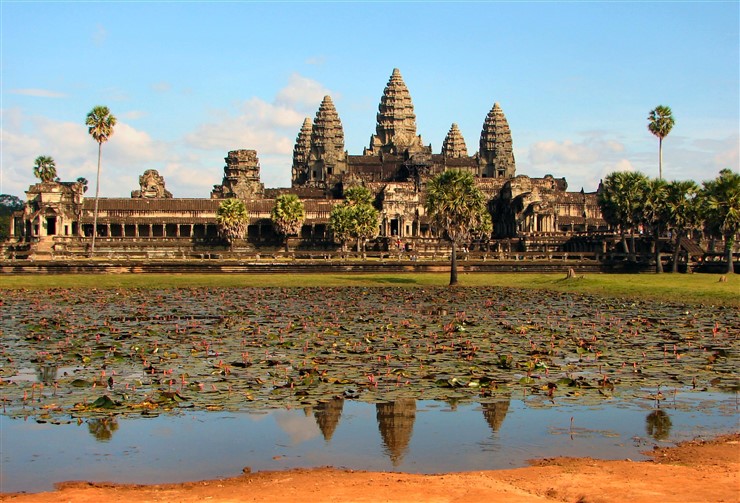
Cambodia Tourist Visa Exemption: Who Actually Qualifies
For holders of ordinary passports, Cambodia’s visa exemption is narrower than several online guides suggest. It covers ASEAN member states — Brunei, Indonesia, Laos, Malaysia, Myanmar, Philippines, Singapore, Thailand, and Vietnam — along with Maldives and Seychelles, with permitted stays ranging from 14 to 30 days depending on nationality. All visa-exempt travellers still need a passport valid for at least six months with a blank page, and a return or onward ticket.
Two changes are worth flagging for anyone planning a trip in 2026:
- Thailand: Thai nationals currently have a reduced 7-day visa-free entry, down from the usual 30 days. This followed a 2025 border situation between Cambodia and Thailand and may change again — Thai travellers should check the current position closer to their travel date.
- China: Chinese ordinary passport holders have a temporary 14-day, multi-entry exemption running from 15 June to 15 October 2026, introduced as a trial measure. Chinese visitors still need to complete the e-Arrival Card described below.
Anyone whose nationality is not on this list — including, for example, travellers from India, the United States, the United Kingdom, most of Europe, China outside the current trial window, and most of Africa and the Americas — needs a Cambodia tourist visa via e-Visa or Visa on Arrival, covered next.
How to Apply for a Cambodia e-Visa
Applying online before departure is the more predictable way to get a Cambodia tourist visa, since approval is confirmed before travel rather than at the border.
- Go to the official portal: Apply only at the official Cambodia eVisa portal — several unofficial sites charge extra fees for the same free-to-apply-through-government service.
- Complete the application: Provide passport details, a digital passport photo, and travel information including arrival date and port of entry.
- Pay the fee: USD 30 by credit card, as listed on the official portal at the time of application; confirm the exact figure there, since small processing-fee variations are reported by different sources.
- Wait for processing: Typically around 3 business days. Apply at least a week before travel to allow time to fix any errors.
- Print and carry the approval: The approved e-Visa is emailed as a PDF — print it and carry it with the passport for entry.
- Complete the e-Arrival Card separately: The e-Visa does not replace the Cambodia e-Arrival Card (CeA) described below — both are required for air travel.
A Cambodia e-Visa is single-entry, valid for a stay of up to 30 days, and accepted at Cambodia’s main international airports and several land border crossings — it’s worth checking that a specific crossing accepts e-Visas before relying on it for an overland entry.
Cambodia Visa on Arrival (VOA)
Visa on Arrival remains available for travellers who prefer not to apply for a Cambodia tourist visa online, or whose crossing point doesn’t accept e-Visas. It’s issued at international airports and major land borders.
- Fee: USD 30 for the tourist (T-class) visa, payable in cash — bring clean, undamaged US dollar bills, as officials may not have change for larger notes.
- Documents needed: Passport valid 6+ months with a blank page, a passport-sized photo, a completed arrival form, and a return or onward ticket.
- Permitted stay: Up to 30 days, extendable once by a further 30 days at the Immigration Department in Phnom Penh.
The Cambodia e-Arrival Card (CeA)
Since 2024, every traveller flying into Cambodia’s international airports must separately submit the Cambodia e-Arrival Card (CeA), regardless of nationality, visa type, or which Cambodia tourist visa route applies. It replaced the paper immigration, health, and customs forms with a single free online submission.
- When to file: Within 7 days before scheduled arrival, and ideally not at the last minute — submissions made too close to arrival can be rejected.
- Cost: Free, via the official portal or the Cambodia e-Arrival mobile app. Third-party sites charging a fee for this are not official.
- Where it applies: Cambodia’s international airports (Phnom Penh, Siem Reap, and Sihanoukville/Techo International). Land border crossings currently still use paper forms.
- After submission: Travellers receive a QR code confirmation — save it on a phone and keep a printed backup for presentation at immigration.
Extending a Cambodia Tourist Visa
A Cambodia tourist visa — whether e-Visa or Visa on Arrival — can be extended once, for a further 30 days, at the Immigration Department in Phnom Penh — taking the maximum stay to 60 days in total. Extensions should be applied for before the current visa expires; many travellers use a registered guesthouse or licensed visa agent to handle the paperwork.
Overstaying carries a fine of USD 10 per day, payable in cash. Overstays beyond 30 days require an exit visa (an additional USD 30 fee) processed at the Visa Office in Phnom Penh before departure, and can result in a re-entry ban.
Document Checklist for a Cambodia Tourist Visa
Regardless of which Cambodia tourist visa route applies, the core documents are broadly the same:
| Document | Requirement | Applies to |
|---|---|---|
| Passport | Valid for at least 6 months from date of entry, with 1 blank page | All routes |
| e-Arrival Card (CeA) | Completed online within 7 days of arrival; free; QR code required at immigration | All air travellers |
| Onward/return ticket | Confirmed departure within the permitted stay period | All routes |
| Passport photo | One recent passport-sized photo | e-Visa and Visa on Arrival |
| Visa fee in cash (USD) | USD 30, clean undamaged notes | Visa on Arrival only |
| Completed application form | Online e-Visa form via the official portal | e-Visa only |
Related Southeast Asia Immigration Guides
Combining a Cambodia tourist visa trip with a wider regional itinerary? This related guide may help:
- Thailand Tourist Visa — for travellers pairing Cambodia with a Thailand leg on the same trip.
Frequently Asked Questions
Do I need a Cambodia tourist visa if I’m from India, the US, or Europe?
Yes. None of these are on Cambodia’s ordinary-passport exemption list, which is limited mainly to ASEAN member states plus Maldives and Seychelles. Travellers from India, the US, the UK, and most of Europe need an e-Visa or Visa on Arrival.
How much does a Cambodia tourist visa cost?
Both the e-Visa and Visa on Arrival (tourist/T-class) are USD 30 for a 30-day stay. Confirm the exact fee on the official eVisa portal at the time of application, since some third-party sites add unofficial processing charges.
Is the Cambodia e-Arrival Card the same as the visa?
No. The e-Arrival Card is a separate, free arrival registration required of every air traveller regardless of visa type. Having a visa doesn’t remove the need to also complete the e-Arrival Card.
Can I extend a Cambodia tourist visa?
Yes. Both the e-Visa and Visa on Arrival can be extended once, for a further 30 days, at the Immigration Department in Phnom Penh, for a maximum stay of 60 days.
Why do Thai nationals only get 7 days visa-free now instead of 30?
Cambodia reduced the visa-free period for Thai nationals following a 2025 border situation between the two countries. This is a current, specific measure rather than a general policy change, and it may be revised — Thai travellers should check the latest position before travelling.
What happens if I overstay my Cambodia visa?
A fine of USD 10 per day applies, payable in cash. Overstays beyond 30 days also require an exit visa (USD 30) processed at the Visa Office in Phnom Penh before leaving, and can lead to a re-entry ban.