
| Thailand Tourist Visa Key Takeaways |
| • Thailand offers three separate routes for tourists: visa exemption, Visa on Arrival (VOA), and a Tourist Visa (TR) or e-Visa applied for in advance. |
| • As of July 2026, the standing 60-day visa exemption for eligible nationalities remains in force. A Thai Cabinet decision from 19 May 2026 to shorten this window has been approved in principle but is not yet published in the Royal Gazette, so it is not yet law. |
| • A Thailand Digital Arrival Card (TDAC) must be filed online within 72 hours of arrival — this applies to every nationality and every entry route, with no exceptions. |
| • Immigration officers can ask any traveller to show proof of funds, commonly cited at THB 20,000 per person, along with a return or onward ticket and confirmed accommodation. |
| • Visa on Arrival currently costs THB 2,000, permits a maximum stay of 15 days, and cannot be extended — travellers needing longer stays should apply for a Tourist Visa before departure. |
| • The pending 2026 reforms would narrow Visa on Arrival eligibility from 31 countries to just four, while most other nationalities would move from 60 days to 30 days of visa-free entry. |
Anyone planning a trip needs to know which Thailand tourist visa route actually applies to them, because Thailand currently runs three separate entry systems side by side, and one of them is in the middle of a significant overhaul.
Depending on nationality, a traveller may be able to enter without a visa, may need to collect a Visa on Arrival at the airport, or may need to apply for a Tourist Visa before flying. On top of that, every traveller — regardless of route or nationality — now has to complete a separate digital arrival card and be ready to show proof of funds if asked. This guide sets out exactly how each route works today, what is changing, and what remains only proposed.
The starting point matters: on 19 May 2026, Thailand’s Cabinet approved, in principle, a restructuring of its visa exemption and Visa on Arrival system affecting more than 90 nationalities. That decision is not yet in force. Cabinet-approved immigration changes take legal effect only after publication in the Royal Gazette, followed by a 15-day grace period, and no publication date has been confirmed. The Royal Thai Embassy, New Delhi’s official visa page states the current terms for affected nationalities “remain effective until further announcement.” This Thailand tourist visa guide covers both the rules in force today and the changes that are pending, clearly separated.
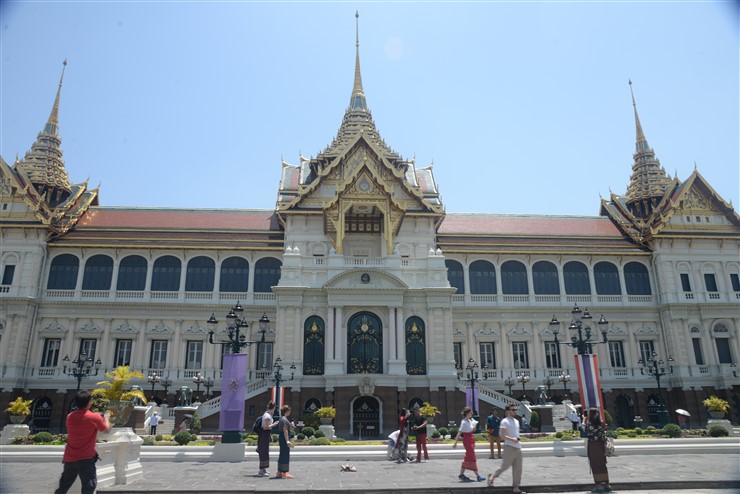
Ways to Enter Thailand as a Tourist
Every visit to Thailand for tourism falls into one of three categories. Which one applies depends on nationality, intended length of stay, and how far in advance the trip is planned.
- Visa exemption: Citizens of eligible countries enter without applying for any visa — no embassy visit, no advance paperwork, just a passport and an immigration stamp on arrival.
- Visa on Arrival (VOA): Available only to a shorter list of nationalities. Applied for and paid at a counter on arrival, rather than in advance.
- Tourist Visa (TR) or e-Visa: Applied for online or through a Royal Thai Embassy or Consulate before departure — for nationalities not on the exemption or VOA list, or anyone wanting a longer, more certain stay.
The table below compares all three Thailand tourist visa routes at a glance, based on the rules currently in force.
| Route | Who it’s for | Typical stay | Fee | When to apply |
|---|---|---|---|---|
| Visa exemption | Citizens of eligible countries (currently ~93; see note below) | Up to 60 days (currently; pending change to 30 days) | None | No application – stamped on arrival |
| Visa on Arrival (VOA) | Citizens of a defined, shorter list of countries | Up to 15 days, non-extendable | THB 2,000 | At the airport/border counter on arrival |
| Tourist Visa (TR) / e-Visa | Any nationality not covered above, or anyone wanting a longer/more certain stay | Up to 60 days, extendable once by 30 days | From approx. THB 2,000-2,500 (single entry) | Before departure, via embassy or official e-Visa portal |
Thailand Tourist Visa Exemption: Current Rules
As things stand today, citizens of eligible countries can enter Thailand for tourism or short-term business purposes without a Thailand tourist visa and stay for up to 60 days per entry, with the option to apply for a single 30-day extension at a Thai immigration office. This scheme has been in place since July 2024 and currently covers around 93 countries and territories. Land-border entry under this scheme is capped at twice per calendar year; there is no such cap for arrivals by air. A small number of countries also have separate bilateral agreements — typically 90-day, 30-day, or 14-day — that run independently of this list.
The pending 2026 overhaul — approved but not yet in force
On 19 May 2026, Thailand’s Cabinet approved, in principle, a restructuring of this system under a “one country, one visa privilege” approach. If and when it takes effect, it would replace the current 60-day exemption entirely:
- A 30-day visa exemption would apply to roughly 54 countries and territories — covering most of the current 60-day list, including much of Europe, North America, and several Asia-Pacific nations.
- A new 15-day exemption category would be introduced for a small number of additional nationalities.
- Visa on Arrival eligibility would shrink sharply, from 31 countries down to just four — Azerbaijan, Belarus, India, and Serbia — with those four nationalities’ visa-exempt privilege effectively withdrawn in favour of VOA-only entry.
- Each country would be limited to a single visa-exemption category, removing the overlaps that exist today.
None of this is in force yet, and no Gazette date has been announced. Authorities have confirmed the change will not be retroactive — travellers already in Thailand, or who enter before the new rules take effect, can complete their stay under the conditions that applied when they arrived. Even so, given how quickly publication could happen, anyone booking a trip that relies on the full 60 days should treat 30 days as the safer planning assumption.
| Category | Current rule (in force today) | Pending rule (approved, not yet in force) | Status |
|---|---|---|---|
| General visa exemption | 60 days, ~93 countries/territories | 30 days, ~54 countries/territories | Awaiting Royal Gazette publication |
| New short exemption tier | Does not currently exist | 15 days, small group of additional countries | Awaiting Royal Gazette publication |
| Visa on Arrival (VOA) | 31 countries eligible, 15-day stay, THB 2,000 fee | Narrowed to 4 countries: Azerbaijan, Belarus, India, Serbia | Awaiting Royal Gazette publication |
| Effective date | N/A | 15 days after Royal Gazette publication | No publication date confirmed yet |
Thailand Visa on Arrival (VOA)
Visa on Arrival is a separate route for a defined list of nationalities that are not on the visa-exemption list. Instead of applying in advance, eligible travellers collect the visa at a designated counter when they land at a Thai international airport or cross at a major land border.
- Fee: THB 2,000, payable in Thai Baht cash at the counter — foreign currency and cards are typically not accepted.
- Permitted stay: Up to 15 days, non-extendable. Anyone wanting longer should apply for a Thailand tourist visa before travelling instead.
- Documents needed: Passport valid 6+ months, one passport photo, confirmed return/onward ticket, proof of accommodation, and proof of funds (commonly THB 10,000 per person or THB 20,000 per family).
The VOA-eligible country list is set to shrink significantly once the pending reforms take effect, so travellers who currently rely on this route to avoid applying for a Thailand tourist visa in advance should check with the Royal Thai Embassy or Consulate in their country before booking, especially for trips more than a few weeks out.
How to Apply for a Thailand Tourist Visa (TR) or e-Visa
Travellers whose nationality is not on the exemption or VOA list — or who simply want a longer, more certain stay — apply for a Tourist Visa (TR) or e-Visa before departure. The process is broadly the same whether it is filed online through Thailand’s official e-Visa portal or in person at a Royal Thai Embassy or Consulate.
- Confirm eligibility and visa type: Check the current exemption and VOA lists for your nationality. If neither applies, or a longer stay is needed, a Thailand tourist visa (TR) or e-Visa is the route to use.
- Gather the required documents: A passport valid for at least six months with blank pages, a recent passport photo, a completed application form, proof of onward or return travel, proof of accommodation, and evidence of sufficient funds.
- Submit the application: File online through the official Thai e-Visa portal, or submit in person or through an authorised visa application centre for the Royal Thai Embassy or Consulate covering your location.
- Pay the visa fee: Fees vary by entry type — broadly from around THB 2,000 for a single-entry visa to higher amounts for multiple-entry visas. Fees were last revised on 27 April 2026, so confirm the current amount before paying.
- Wait for processing: Standard e-Visa processing typically takes a few working days; embassy-issued visas can take longer. Apply well ahead of travel dates, particularly in peak booking periods.
- Collect the approved visa: An approved e-Visa is issued electronically — print it and carry it with the passport. An embassy-issued visa is affixed as a sticker in the passport, collected in person or by courier depending on the embassy’s process.
A standard Thailand tourist visa (TR) generally permits a stay of up to 60 days and can be extended once, for a further 30 days, at a Thai immigration office. Frequent visitors may also look at a Multiple Entry Tourist Visa (METV), typically valid for six months, allowing up to 60 days per entry.
The Thailand Digital Arrival Card (TDAC)
Since 1 May 2025, every traveller entering Thailand — regardless of nationality, visa route, or how they are arriving — must complete a Thailand Digital Arrival Card (TDAC) before reaching immigration, whether they hold a Thailand tourist visa or are entering visa-free. It replaced the older paper TM6 arrival form and applies equally to air, land, and sea arrivals.
- When to file: Any time within 72 hours before scheduled arrival in Thailand.
- Cost: Free. The only official portal is the Thai government’s TDAC website — travellers should be wary of third-party sites that charge a fee for what is a free government service.
- What it covers: Personal details, travel information, and the accommodation address for the stay in Thailand.
- After submission: Travellers receive a QR code confirming submission, which should be saved on a phone and, ideally, printed as a backup for presentation at the immigration counter.
Proof of Funds Requirement
Thai immigration rules have long required travellers to show they can financially support themselves for the length of their stay. This is not new for 2026, but it is being checked more actively as part of the broader tightening described above, and it applies to every nationality, not one specific group of Thailand tourist visa holders.
The commonly cited threshold is THB 20,000 in cash or the equivalent per person (or THB 40,000 per family), though some current guidance for specific entry categories references THB 10,000 per person. Not every traveller is asked, but the requirement is real and enforceable, and someone who cannot produce proof when asked can be refused entry. A bank statement, cash, or a debit/credit card can generally serve as evidence, though some officers may specifically request physical cash rather than a banking app, so it’s worth carrying at least part of the amount in hard currency.
Extending a Stay in Thailand
Extension options for a Thailand tourist visa depend entirely on which route was used to enter:
- Visa exemption: A single 30-day extension is available at a Thai immigration office, generally around THB 1,900.
- Tourist Visa (TR): A single 30-day extension is available at a Thai immigration office.
- Visa on Arrival (VOA): Cannot be extended under any circumstances. Anyone wanting longer than 15 days needs to leave and re-enter on a different visa, or should have applied for a Thailand tourist visa before travelling.
Document Checklist for a Thailand Tourist Visa
Regardless of which Thailand tourist visa route applies, the core documents immigration officers look for are broadly the same. The table below sets these out, with route-specific notes.
| Document | Requirement | Applies to |
|---|---|---|
| Passport | Valid for at least 6 months from date of entry, with blank pages | All routes |
| TDAC | Completed online within 72 hours of arrival; free; QR code required at immigration | All routes |
| Onward/return ticket | Confirmed departure within the permitted stay period | All routes |
| Proof of accommodation | Hotel booking or confirmed address for the full stay | All routes |
| Proof of funds | THB 10,000-20,000 per person (or equivalent), cash preferred | All routes; checked more often on VOA |
| Passport photo | One recent passport-sized photo | VOA and embassy-issued TR applications |
| Visa fee in cash (THB) | THB 2,000 for VOA | VOA only |
| Completed application form | Online e-Visa form or embassy application form | Tourist Visa (TR) / e-Visa only |
A Note on Working While on a Tourist Entry
Visa exemption, VOA, and the Thailand tourist visa are all intended for tourism or short-term, non-employment purposes. Anyone who has already secured a job in Thailand should not enter on these routes — the appropriate employment visa (typically a Non-Immigrant B visa with a work permit) needs to be arranged before travelling. Working on a tourist entry, even informally or remotely, falls outside what these categories permit and can cause problems on future entries.
Related Thailand Immigration Guides
Planning beyond a Thailand tourist visa? These related guides may help:
- Thailand Citizenship — for travellers exploring long-term settlement options.
- Thailand Smart Visa — for skilled professionals, investors, and entrepreneurs looking at longer-stay work options.
- Cambodia Tourist Visa — for travellers combining Thailand with a neighbouring Southeast Asia itinerary.
Frequently Asked Questions
Is the Thailand tourist visa exemption still 60 days right now?
Yes. As of publication, the 60-day exemption remains in force for currently eligible nationalities. A change to 30 days has been approved by Thailand’s Cabinet but is not yet law — it takes effect only after Royal Gazette publication, which hasn’t happened yet.
How much does a Thailand tourist visa cost?
It depends on the route. Visa exemption is free. Visa on Arrival costs THB 2,000. A Thailand tourist visa (TR) or e-Visa typically costs from around THB 2,000–2,500 for a single entry, with higher fees for multiple-entry options — confirm the current fee with the embassy or official e-Visa portal before paying.
Do I need to complete the TDAC even if I’m visa-exempt?
Yes. The Thailand Digital Arrival Card is mandatory for every traveller, regardless of nationality or which Thailand tourist visa route applies, and it’s free to complete.
How much cash do I need to show at Thai immigration?
The commonly cited figure is THB 20,000 per person (or THB 40,000 per family), though some guidance for certain categories references THB 10,000 per person. Not everyone is asked, but officers can request proof of funds and may prefer physical cash over a bank app.
Can I extend a Thailand Visa on Arrival?
No. A VOA stamp cannot be extended and is capped at 15 days. Anyone who may need longer should apply for a Thailand tourist visa before travelling instead.
Will the pending Thailand visa changes affect a trip I’ve already booked?
Authorities have said the new rules won’t apply retroactively — travellers who enter before the changes take effect can complete their stay under the conditions that applied on arrival. Still, since the Gazette publication date isn’t confirmed, check the latest position with the Royal Thai Embassy shortly before departure.