
| Key Takeaways |
| – The UK Graduate visa lets international students stay and work after finishing a UK degree, with no job offer or employer sponsorship required. – Under current rules, it lasts 2 years for bachelor’s and master’s graduates, or 3 years for PhD graduates — but this is changing. – From 1 January 2027, the standard duration is confirmed to drop to 18 months for non-PhD graduates; applications made by 31 December 2026 still get the full 2 years. – The application fee is £937 from 8 April 2026, plus the Immigration Health Surcharge at the adult rate of £1,035 per year, paid upfront for the full visa length. – The visa cannot be extended or renewed — holders must switch to another route, most commonly the Skilled Worker visa, before it expires. – Dependants already on the applicant’s Student visa can usually continue on the Graduate route, but new dependants cannot join under this route. |
The UK Graduate visa allows international students to remain in the UK and work, or look for work, after successfully completing a UK degree — without needing a job offer or a sponsoring employer. It has been one of the most attractive features of studying in the UK since its introduction in July 2021. A confirmed rule change, however, is about to make it considerably shorter for most graduates from January 2027. This guide explains how the Graduate visa works today, what is changing, who qualifies, and what it costs.
What Is the UK Graduate Visa?
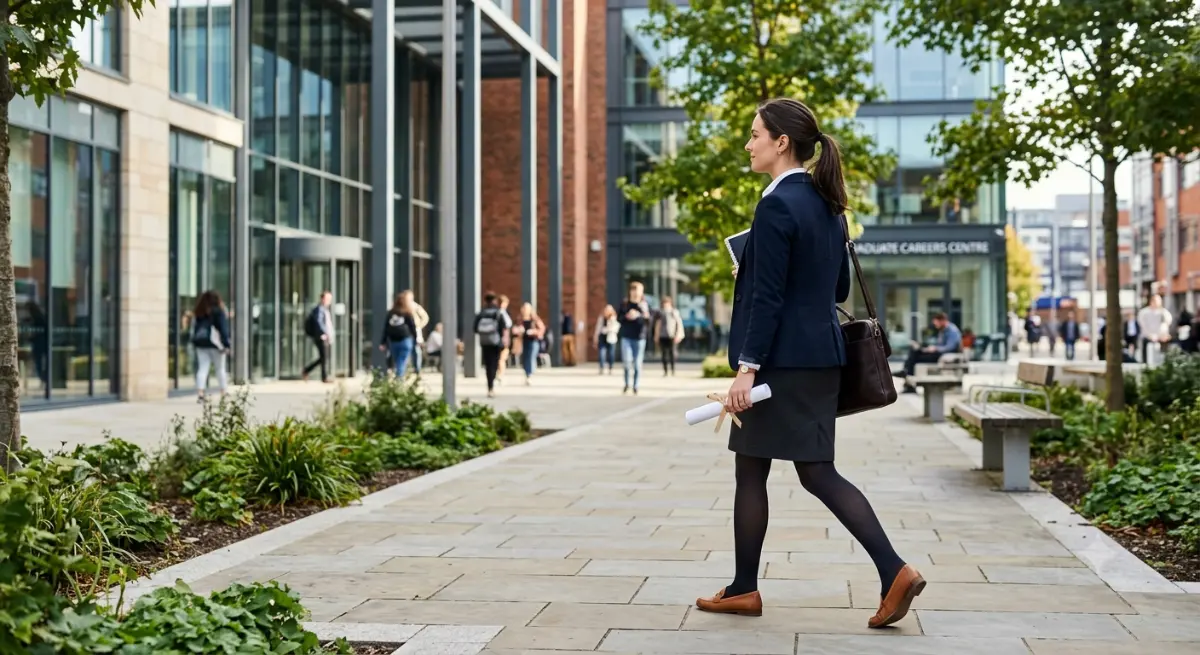
The Graduate visa is a post-study route for international students who have completed an eligible course at a UK higher education institution. Unlike most UK work visas, it is entirely unsponsored — holders can take almost any job at any salary, work for multiple employers, be self-employed, or simply look for work, all without an employer needing a sponsor licence. It does not lead directly to settlement, but it is commonly used as a bridge into a longer-term route such as the Skilled Worker visa.
Read: Different Types Of UK Visas – A Complete Guide
The Confirmed Change: 18 Months From January 2027
Under the rules in force today, the Graduate visa lasts 2 years for bachelor’s and master’s graduates, and 3 years for PhD and other doctoral graduates. This is changing. Following the May 2025 immigration white paper, the Home Office laid a Statement of Changes in Immigration Rules on 14 October 2025 confirming that, for applications made on or after 1 January 2027, the standard Graduate visa duration will be reduced to 18 months for non-PhD graduates. PhD graduates are unaffected and continue to receive 3 years.
This is a confirmed, dated change rather than a proposal still under discussion — the legal mechanism implementing it has already been published. Anyone completing a UK degree and planning to apply for a Graduate visa before 31 December 2026 will still receive the full 2-year duration; the shorter 18-month period applies only to applications submitted from 1 January 2027 onward.
| Applicant Category | Graduate Visa Duration |
|---|---|
| Bachelor’s or master’s graduate, applies on or before 31 Dec 2026 | 2 years |
| Bachelor’s or master’s graduate, applies on or after 1 Jan 2027 | 18 months |
| PhD or other doctoral graduate (any application date) | 3 years (unaffected by the change) |
The Home Office has framed the change as encouraging a faster transition into graduate-level employment. Universities and education sector bodies have raised concerns that a shorter post-study window could make the UK less attractive to prospective international students compared with competitor destinations.
Who Is Eligible for the UK Graduate Visa?
To qualify for the UK Graduate visa, an applicant generally needs to meet all of the following:
- Hold a valid Student visa (or legacy Tier 4 (General) student visa) at the time of applying
- Have successfully completed an eligible course — typically a bachelor’s degree, master’s degree, PhD, or certain other approved qualifications such as a PGCE or a recognised legal practice course
- Have studied with a licensed Student sponsor that has confirmed course completion to the Home Office
- Have studied in the UK for the minimum required period for the course (broadly, the full course if 12 months or shorter, or at least 12 months if the course is longer)
- Apply from inside the UK, before the current Student visa expires
Only one Graduate visa can be granted per person, regardless of how many qualifications someone goes on to complete. Applicants cannot apply from outside the UK, and missing the window before the Student visa expires means losing eligibility for the route entirely.
What You Can and Cannot Do on the Graduate Visa
Permitted
- Work in most jobs, at any salary, without needing a sponsoring employer
- Work for more than one employer at the same time
- Be self-employed or start a business
- Carry out voluntary work
- Travel abroad and return to the UK
- Switch to another visa route, such as the Skilled Worker visa, before the Graduate visa expires
Not Permitted
- Claiming most public funds or benefits
- Working as a professional sportsperson or sports coach
- Extending or renewing the Graduate visa itself — it is a one-time, non-extendable grant
UK Graduate Visa Fees and Costs
From 8 April 2026, the Graduate visa application fee is £937 for the main applicant and the same amount for each dependant. On top of this, applicants pay the Immigration Health Surcharge at the adult rate — £1,035 per year of visa length — even though they would have paid the lower student rate during their studies. Both the fee and the IHS are paid in full at the time of application.
| Cost Item | Amount |
|---|---|
| Application fee (main applicant or dependant) | £937 |
| IHS – 18-month visa (from 1 Jan 2027) | £1,152.50 |
| IHS – 2-year visa | £2,070 |
| IHS – 3-year visa (PhD) | £3,105 |
| Total cost, 2-year visa (fee + IHS) | £3,007 |
These figures are non-refundable once an application is submitted, except in limited circumstances. A full breakdown of UK visa costs more broadly is available in the UK Visa Fees guide.
Documents Required for a UK Graduate Visa Application
- Valid passport or other travel document
- Biometric Residence Permit, if one was issued for the Student visa
- Confirmation of Acceptance for Studies (CAS) reference number
- Written consent from a financial sponsor, if a scholarship or sponsorship body funded both tuition and living costs
- Proof of relationship documents, such as a marriage certificate or birth certificate, if dependants are applying
- Certified translation of any documents not already in English or Welsh
How to Apply for the UK Graduate Visa
1. Wait for your university or college to confirm course completion to the Home Office — do not apply before this happens.
2. Apply online from inside the UK, before your current Student visa expires.
3. Pay the £937 application fee and the Immigration Health Surcharge for your full visa length.
4. Verify your identity, either through the UK Immigration: ID Check app or at a UKVCAS appointment.
5. Wait for a decision — typically up to 8 weeks, with no priority service available.
Applications are made through the official GOV.UK Graduate visa page.
Dependants on the Graduate Route
Partners and children who already hold permission as dependants on the applicant’s Student visa can usually apply to continue as dependants on the Graduate visa. New dependants who were not already on the Student visa cannot join under this route. Each dependant pays their own £937 application fee and their own Immigration Health Surcharge at the adult or child rate as applicable, and their permission expires on the same date as the main applicant’s.
Anyone planning a longer-term stay in the UK, including eventual settlement, should also review the guide to Indefinite Leave to Remain in the UK, since the Graduate visa itself does not count toward the settlement qualifying period.
Graduates who plan to work in the UK while studying or shortly after finishing should also be aware of their tax obligations, covered in the guide to Tax Filing in the UK for International Students.
Frequently Asked Questions
How long does the UK Graduate visa last?
Currently 2 years for bachelor’s and master’s graduates, or 3 years for PhD graduates. From 1 January 2027, this reduces to 18 months for non-PhD graduates; applications made by 31 December 2026 still receive the full 2 years.
Is the 18-month Graduate visa change confirmed or still a proposal?
It is confirmed. The Statement of Changes implementing the reduction was laid before Parliament on 14 October 2025, with a fixed commencement date of 1 January 2027. It is not a discussion document or an unconfirmed proposal.
How much does the UK Graduate visa cost?
The application fee is £937 from 8 April 2026, plus the Immigration Health Surcharge at £1,035 per year of visa length, paid upfront in full. A 2-year visa therefore costs £3,007 in total; a 3-year PhD visa costs £4,042.
Can I extend my UK Graduate visa?
No. The Graduate visa is a one-time, non-extendable grant. To remain in the UK after it expires, you must switch into another route, most commonly the Skilled Worker visa, before your Graduate visa runs out.
Do I need a job offer to apply for the UK Graduate visa?
No. The Graduate visa is entirely unsponsored. You do not need a job offer, an employer, or a sponsor licence to apply or to work while on this visa.
Can my family join me on the UK Graduate visa?
Partners and children who were already dependants on your Student visa can usually continue as dependants on the Graduate visa. New dependants who were not already in the UK on your Student visa cannot join under this route.
Source
GOV.UK: Graduate visa — Overview
Disclaimer
This article is for general information only and does not constitute immigration or legal advice. Graduate visa rules, fees, and durations are subject to change; always confirm the current requirements on the official GOV website.UK website before applying.