
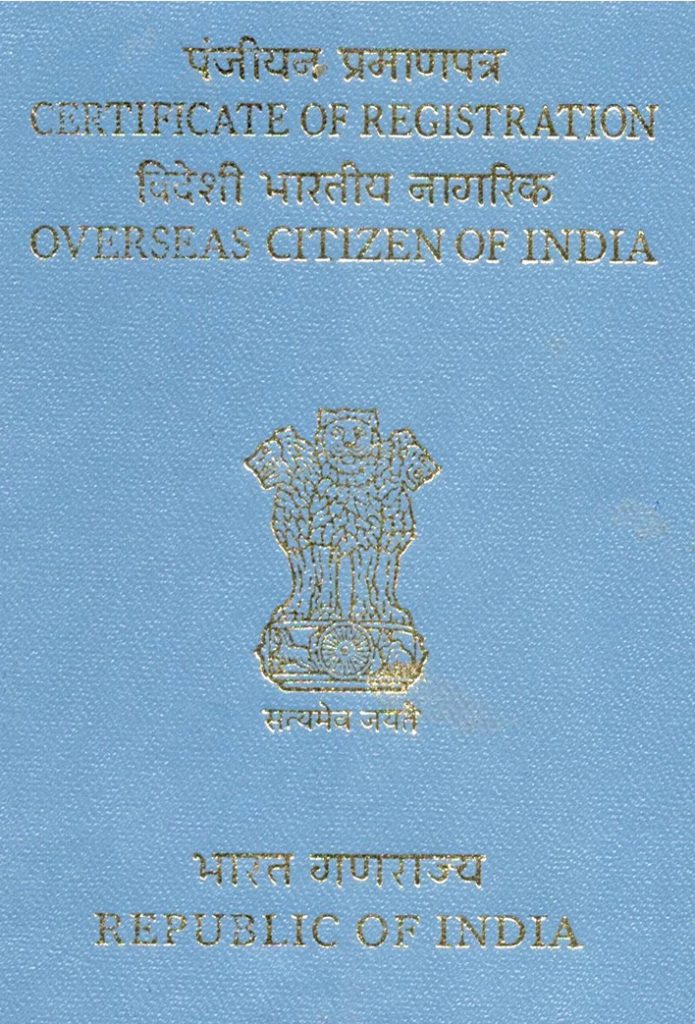
The OCI card just went through its biggest overhaul in more than a decade. If you last looked into this before April 2026, large parts of what you knew — the fees, the paper-based process, even the six-month stay rule — have changed. This guide covers what the OCI card is, who’s eligible, exactly what changed this year, and how to apply or renew under the new digital system.
What Is the OCI Card?
Since India doesn’t recognise dual citizenship, anyone of Indian origin who takes up citizenship of another country has to give up their Indian passport. The loss is decided by Indian law, not by the other country: the United States, for example, allows dual nationality, as our guide to US dual citizenship explains. The Overseas Citizen of India (OCI) card, launched in 2005, exists to soften that trade-off: it functions as a multiple-entry, multi-purpose, lifelong visa, letting holders live, work, and study in India indefinitely without needing a separate visa for every trip.
It comes with most of the practical benefits of citizenship — parity with Non-Resident Indians on economic, financial, and educational matters — but not the political ones. An OCI cardholder cannot vote, hold public office, apply for government jobs, or buy agricultural land or farmhouse property.
Who Is Eligible to Apply?
You’re generally eligible for an OCI card if you meet at least one of the following:
- You were an Indian citizen on or after 26 January 1950
- You belonged to a territory that became part of India after independence
- You were eligible for Indian citizenship on 26 January 1950
- You are the child, grandchild, or great-grandchild of someone who meets one of the above criteria
- You are a minor child of parents who meet one of the above criteria, or where at least one parent is an Indian citizen
- You are the registered spouse of an Indian citizen or OCI cardholder, with the marriage registered and subsisting for at least 2 years
Members of foreign militaries, and citizens (or descendants of citizens) of Pakistan or Bangladesh, are not eligible for this status. One notable 2026 expansion: fifth- and sixth-generation members of the Indian-origin Tamil diaspora in Sri Lanka are now eligible, where previously eligibility stopped at the fourth generation.
What’s New: India’s April 2026 OCI Overhaul
The Citizenship (Amendment) Rules, 2026, notified by the Ministry of Home Affairs and effective from 1 April 2026, represent the first major rework of the OCI card programme since it launched. Six changes matter most for anyone applying for or holding one today.
Fully Digital Applications and e-OCI
Every OCI application, renewal, and renunciation now goes through the official online portal, with electronic submission of biometric data and e-signatures replacing the old paper-based filing. As of May 2026, applicants also have the option of an electronic OCI (e-OCI) alongside, or instead of, a physical card.
No More 6-Month Stay Requirement
Previously, foreign nationals applying for an OCI card from within India had to show they’d been “ordinarily resident” there, which in practice was treated as a six-month continuous stay. The Bureau of Immigration has clarified that this is no longer required: eligible applicants with a valid long-term visa and the right documents can now apply soon after arriving in India.
New Passport-Update Compliance Rule
OCI cardholders must now upload their updated passport details to the OCI portal within 90 days of receiving a new passport. Missing that window triggers a USD 25 fine — a new financial consequence that didn’t exist under the old rules.
Uniform Global Fee Structure
Fees used to vary by country of application, which created confusion and inconsistency. The new rules set a single global fee structure instead, covered in detail in the fees section below.
PIO Cards No Longer Valid
The Person of Indian Origin (PIO) card scheme — already merged into OCI back in 2015 — has now been fully discontinued, and PIO cards are no longer accepted as valid travel documents at all. Anyone still holding one needs to convert to OCI.
Expanded Eligibility and Biometric Consent
Beyond the Sri Lankan Tamil diaspora expansion mentioned above, biometric consent is now mandatory at OCI registration, feeding into India’s broader Fast-Track Immigration and facial-recognition e-gate systems at major airports.
OCI Card Fees in 2026
The single biggest practical change for most applicants is the fee structure. These figures reflect the uniform global rates that took effect on 1 April 2026.
| Service | Fee |
|---|---|
| Fresh OCI application (outside India) | USD 275 |
| Fresh OCI application (within India) | ₹15,000 |
| Reissue (passport renewal at 20/50, name change) | USD 25 |
| Duplicate (lost, stolen, or damaged card) | USD 100 |
| Late passport-update penalty (after 90 days) | USD 25 |
Some missions may apply a small additional service or welfare charge on top of the USD 275 fee — check your specific consulate, mission, or VFS Global centre for any local add-ons before paying. Payment for in-India applications is by demand draft made payable to the Ministry of Home Affairs.
How to Apply for an OCI Card: Step by Step
1. Confirm your eligibility. Check that you meet at least one eligibility criterion above and aren’t excluded on military or nationality grounds.
2. Register on the OCI portal. Create an account and complete the application form at the official OCI Services portal.
3. Upload your documents. Scan and upload all supporting documents — see the list below — along with a photo and signature meeting the portal’s size and format requirements.
4. Pay the application fee. Pay the relevant fee from the table above, online for most applications, or by demand draft for in-India fresh applications.
5. Complete biometric enrolment. Biometric consent is now mandatory; this is typically completed at a VFS Global centre abroad or at a Foreigners Regional Registration Office (FRRO) within India.
6. Track and receive your card. Use the Web File Number generated after submission to track your application. Processing for most categories runs around 30–40 working days, barring complications.
Apply directly through the official OCI Services portal rather than third-party sites.
Card Validity and Reissue Rules
An OCI card is valid for life and never needs renewing in the way a passport does — but it does need to be reissued at specific milestones, since the card captures a photo that needs updating as your appearance changes. If you registered as a cardholder before turning 20, you’ll need to reissue the card once after your next passport renewal, past your 20th birthday. If you registered after turning 20, no reissue is required at that age. After turning 50, most cardholders need to reissue the card once as well. Outside of those two milestones, you don’t need a new physical card every time your passport is renewed — but remember the 90-day passport-update rule above still applies regardless of whether a physical reissue is required.
Our dedicated guide on renewal and reissuing OCI cards covers this in more depth.
Documents Required for an OCI Card Application
Required documents vary slightly by category, but a fresh OCI application typically needs:
- A completed online application form
- A recent photograph and signature, meeting the portal’s size and format specifications
- A self-attested copy of your current passport
- Proof of Indian origin — your own or a parent’s/grandparent’s cancelled Indian passport, birth certificate, or equivalent
- For former Indian citizens: evidence of formal renunciation or surrender of your Indian passport
- For spouse-based applications: a registered marriage certificate and a declaration that the marriage is subsisting
- Proof of your current address outside India
OCI vs Indian e-Visa: Which Do You Need?
People sometimes confuse the OCI card with the Indian e-Visa, but they serve very different purposes. The OCI card is a long-term, multiple-entry status for people of Indian origin who hold foreign citizenship, with no expiry and lifelong validity. The Indian e-Visa, by contrast, is a short-term electronic travel authorisation for foreign nationals with no Indian-origin connection, typically valid for a single trip or a limited multi-entry window. If you’re eligible for it, it’s almost always the better long-term option over repeatedly applying for visas. See our India e-Visa guide if you’re not sure which applies to you.
Digital e-Arrival Card: A Separate Requirement for All Travelers
Don’t confuse the OCI card application with the Digital e-Arrival Card, which is a separate, mandatory pre-travel form that all travellers to India — including OCI cardholders — must complete online before boarding their flight. Physical disembarkation forms have been discontinued entirely. The form takes about five minutes and asks for flight, accommodation, and travel document details; keep your confirmation ready to show at immigration on arrival.
If you’re renewing your Indian passport around the same time as your OCI card, our Indian ePassport guide and Indian Passport Rules 2026 guide cover what’s changed on that side.
Frequently Asked Questions
How much does an OCI card cost in 2026?
A fresh OCI card application costs USD 275 outside India or ₹15,000 within India. Reissuing an existing card costs USD 25, and a duplicate for a lost or damaged card costs USD 100.
Do I still need 6 months of stay to apply for an OCI card in India?
No. As of April 2026, the Bureau of Immigration has removed this requirement for eligible applicants who hold a valid long-term visa and the necessary documents.
Is the OCI card the same as dual citizenship?
No. India does not recognise dual citizenship. This status is a lifelong multiple-entry visa with most economic and educational benefits of citizenship, but without voting rights, public office eligibility, or the right to buy agricultural land.
What happens if I don’t update my passport details after renewing my passport?
You have 90 days from receiving a new passport to upload the updated details to the OCI portal. Missing this deadline triggers a USD 25 penalty under the 2026 rules.
Can I still use my PIO card to travel to India?
No. PIO cards are no longer valid as travel documents under any circumstances. If you still hold one, you need to convert it to an OCI card.
When does an OCI card need to be physically reissued?
Generally once after you turn 20 (if your card was issued before that age) and once after you turn 50. Outside those milestones, you don’t need a new physical card every time your passport is renewed, though the 90-day online update rule still applies.
Can I apply for an OCI card for my child?
Yes. Minor children are eligible if both parents are Indian citizens, or if at least one parent holds Indian citizenship or OCI status, subject to the same documentation requirements as an adult application.
Source: Ministry of Home Affairs, Government of India — Citizenship (Amendment) Rules, 2026, and the official OCI Services portal, accessed June 2026.
Disclaimer: This article is for general informational purposes only and does not constitute legal or immigration advice. OCI rules, fees, and eligibility criteria changed significantly in 2026 and may change again; always confirm current requirements on the official OCI Services portal or with a qualified immigration adviser before applying.