
| Key Takeaways |
|
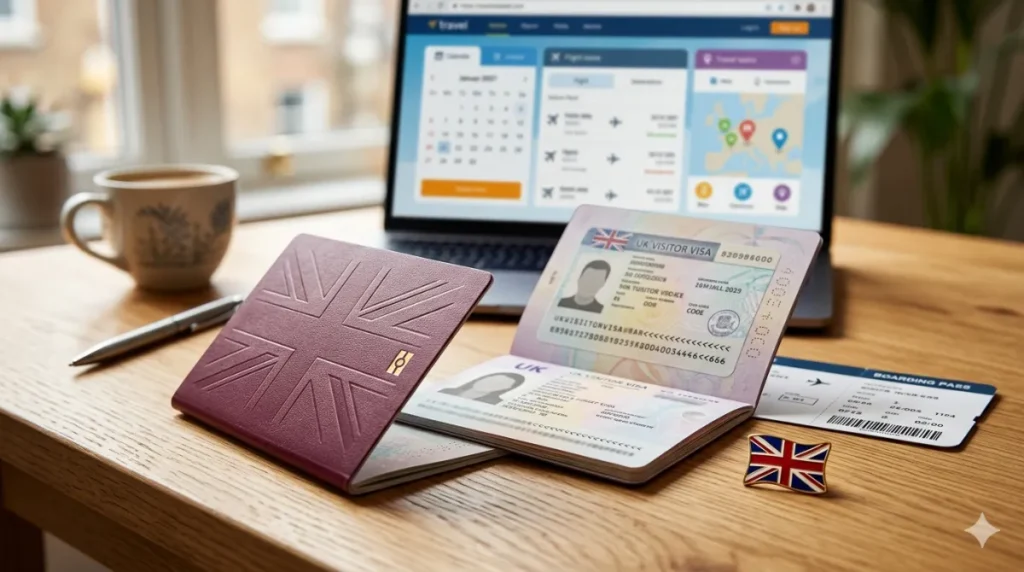
If you’re planning a trip to the United Kingdom and your passport isn’t on the visa-exempt list, you’ll need a UK tourist visa before you travel. Officially called the Standard Visitor visa, it’s the route that covers most short trips to the UK for holidays, visiting family, and many business activities. This guide walks through who actually needs a UK tourist visa, how it differs from the newer Electronic Travel Authorisation (ETA), what it costs in 2026, and exactly how to apply, step by step.
What Is a UK Tourist Visa?
A UK tourist visa is permission to enter the United Kingdom for a temporary visit — typically up to six months — without the right to work, study long-term, or settle. The UK Home Office now groups tourism together with several other short-stay purposes under a single category called the Standard Visitor visa, which replaced a number of older, narrower visitor categories. In everyday use, when people say “UK tourist visa,” this is almost always the route they mean, even though the same visa also covers visiting family, certain business trips, and short courses of study.
According to Home Office data, the UK granted over 2.2 million visitor visas in the year to June 2025, making it one of the most frequently used immigration routes into the country. A UK tourist visa is valid for a single trip or, if you choose a long-term version, for multiple trips over 2, 5, or 10 years — though no single visit can exceed six months regardless of which option you hold.

Do You Need a UK Tourist Visa, or Just an ETA?
This is the question that trips up the most travellers, because the UK now runs two separate systems side by side, and only one of them is a visa.
If your nationality is on the UK’s visa-required list, you must apply for a UK tourist visa before you travel — there is no alternative. If your nationality is visa-exempt, you do not need to apply for one for a short visit, but since 25 February 2026 you do need a UK Electronic Travel Authorisation (ETA) instead.
The ETA is a much lighter, faster, and cheaper process than a visa — a short online form, no biometric appointment, and a fee of roughly £16–£20 — but it is mandatory, and airlines, train operators, and ferry companies are required to check for it before letting you board. Travelling without one when you need one means you simply won’t be allowed to board, let alone enter the UK.
A small number of nationalities, along with Irish citizens, can travel to the UK without either a visa or an ETA. The safest first step for any traveller is to check their specific nationality against the current Home Office list before assuming which category they fall into, since visa-exempt status, ETA requirements, and visa requirements can all change independently of one another.
One subtlety worth knowing: even if your nationality only requires an ETA, you can still choose to apply for a UK tourist visa instead. People sometimes do this if they’ve had visa difficulties before, have a complex travel history, or want a paid engagement formally pre-cleared rather than assessed at the border. If your visa application is approved, you won’t need an ETA as well.
Who Is Eligible for a UK Tourist Visa?
Eligibility for this visa isn’t really about hitting a checklist of numbers — it’s about convincing a caseworker that your visit is genuinely temporary. The core requirements are:
- A genuine intention to visit the UK temporarily and leave before your permission expires, with no intention of living in the UK through frequent or successive visits.
- A valid passport or travel document covering the whole of your stay.
- Enough money to support yourself and any dependants during the trip without working or relying on public funds.
- A credible, specific reason for the visit that fits within what a Standard Visitor visa actually permits.
- No grounds for refusal under the UK’s general immigration rules (for example, certain past visa breaches or criminal convictions).
What You Can and Cannot Do on a UK Tourist Visa
This visa permits a defined set of activities. You can:
- Visit as a tourist or to see friends and family
- Attend business meetings, conferences, or negotiate and sign deals
- Take part in a short recreational course of up to 30 days, or a longer academic course of up to 6 months
- Receive private medical treatment
- Carry out certain permitted paid engagements as a recognised expert, such as giving a lecture
You cannot:
- Work for a UK employer or be self-employed (outside narrowly defined permitted paid engagements)
- Live in the UK through repeated or extended visits
- Marry or give notice of marriage (a separate Marriage Visitor visa exists for this)
- Access public funds or NHS treatment beyond what you arrange and pay for privately
UK Tourist Visa Fees in 2026
The fee depends on how long you want the visa to remain valid, not on how long any single visit will be — every option below still limits each trip to six months.
| Visa validity | Fee (GBP) | Notes |
|---|---|---|
| 6 months (single application) | £127 | Most common choice for a one-off trip |
| 2 years (long-term, multi-entry) | £475 | Each visit still capped at 6 months |
| 5 years (long-term, multi-entry) | £848 | Popular with frequent business or family visitors |
| 10 years (long-term, multi-entry) | £1,059 | Visa expires 6 months after your 18th birthday if you applied as a minor |
| Academic or medical visit over 6 months | £220 | Separate fee band for these specific purposes only |
Visa application fees are non-refundable, even if you’re granted a shorter visa than you applied for or your application is refused. Unlike most work and study routes, this route is exempt from the Immigration Health Surcharge, though you’re still expected to cover the cost of any NHS treatment you receive while visiting, which is why travel insurance is worth arranging separately.
Documents Required for a UK Tourist Visa Application
While exact requirements vary by individual circumstances, most visitor visa applications need:
- A current passport or travel document, valid for your entire stay, with at least one blank page
- A recent digital photo meeting UK visa photo requirements
- Bank statements or other financial evidence covering at least the last 28 days
- Proof of your travel plans, such as a flight itinerary
- Evidence of where you’ll stay, such as a hotel booking or an invitation letter from a UK-based host
- Evidence of ties to your home country — employment, property, or family — that supports your intention to return
- A TB test certificate, if you’re staying longer than six months and arriving from a country on the UK’s TB screening list
How to Apply for a UK Tourist Visa: Step by Step
1. Confirm you actually need a visa. Check your nationality against the current Home Office visa-requirement list before starting — you may need an ETA instead, or nothing at all.
2. Complete the online application. Apply through the official GOV.UK Standard Visitor visa application service, providing personal details, travel plans, and immigration history.
3. Pay the visa fee. Pay online using a debit or credit card, selecting the validity period that matches your travel pattern.
4. Book a biometric appointment. Schedule a visit to a Visa Application Centre (run by commercial partners such as TLScontact or VFS Global) to provide fingerprints and a photograph.
5. Submit your supporting documents. Bring your passport and supporting evidence to your appointment, or upload them digitally depending on the centre’s process.
6. Track your application and await a decision. Most decisions are issued within around three weeks of the biometric appointment, though this can vary by country and season.
Apply directly through the official GOV.UK Standard Visitor visa application page rather than third-party sites that charge extra for the same service.
Processing Time for a UK Tourist Visa
Standard processing takes roughly three weeks from your appointment date, though this can run longer during busy travel seasons or if your application needs further review. Paid faster-decision services are available in many countries for travellers who need a quicker turnaround, but these come at an additional cost on top of the standard visa fee, and exact pricing varies by location — check the fee schedule for your specific Visa Application Centre before relying on one. Building in a buffer of at least a month before your travel date is the safer approach for this kind of application.
Long-Term (Multi-Entry) UK Tourist Visas
If you visit the UK regularly — for family, recurring business trips, or simply frequent holidays — a long-term version can save you from reapplying every time. The 2, 5, and 10-year options all work the same way: you can enter and leave the UK multiple times within that window, but each individual visit is still limited to six months, and a long-term visa does not create any path to residency. If you’re under 18 when you apply for a long-term visa, it will only remain valid until six months after your 18th birthday, regardless of the validity period you paid for.
Common Reasons UK Tourist Visa Applications Are Refused
Most visitor visa refusals come down to a caseworker not being convinced the visit is genuinely temporary, rather than any single missing document. Frequent causes include:
- Weak or inconsistent evidence of intention to leave the UK at the end of the visit
- Insufficient or unclear financial evidence, particularly large unexplained deposits shortly before applying
- A travel history that suggests previous extended or repeated stays in the UK
- Inconsistencies between the stated purpose of the trip and the supporting documents provided
- Previous immigration violations, in the UK or elsewhere
UK Tourist Visa vs Other UK Visa Categories
A UK tourist visa is a short-stay route only — it sits separately from the UK’s work, study, and settlement categories, and it’s important not to confuse the two when planning a longer-term move. If your actual goal is to work, study, or settle in the UK rather than visit, you’ll need a different route entirely; our guide to the different types of UK visas breaks down which category fits which purpose.
It’s also worth knowing that, in almost all cases, you cannot switch from visitor status to another UK visa category from within the country — if your plans change after you arrive, you’ll typically need to leave and apply for the right visa from your home country instead. For a full breakdown of what different UK visa categories cost beyond the tourist route, see our UK visa fee guide.
Frequently Asked Questions About the UK Tourist Visa
How long does a UK tourist visa allow me to stay?
This visa allows a stay of up to six months per visit. Long-term versions valid for 2, 5, or 10 years allow multiple visits over that period, but each individual stay is still capped at six months.
How much does a UK tourist visa cost in 2026?
A six-month version costs £127. Long-term multi-entry options cost £475 for 2 years, £848 for 5 years, and £1,059 for 10 years. These fees are non-refundable, even if your application is refused or you’re granted a shorter visa than requested.
Can I work on a UK tourist visa?
No. This visa does not permit employment with a UK company or self-employment, with the narrow exception of specific permitted paid engagements, such as an invited expert giving a lecture or participating in a recognised event.
Do I need a UK tourist visa if I’m an EU citizen?
Most EU citizens are visa-exempt for short visits and do not need this visa, but since 25 February 2026 they do need a UK ETA before travelling, unless they hold another form of UK immigration permission.
How long before travel should I apply for a UK tourist visa?
Applying around three months before your planned travel date is generally recommended, since standard processing takes about three weeks but can run longer, and you’ll also need to book and attend a biometric appointment before that clock even starts.
Can a UK tourist visa be extended?
In most cases, no. This visa cannot usually be extended beyond six months, except in limited circumstances such as ongoing private medical treatment. If you need a longer stay for a different purpose, you’ll generally need to apply for a different visa category instead.
What’s the difference between a UK tourist visa and a UK ETA?
This route is a full visa application with biometrics, required for nationals on the UK’s visa-required list. A UK ETA is a lighter, faster online travel authorisation for visa-exempt nationals, introduced as a mandatory pre-travel check rather than a visa in its own right.
Source: GOV.UK — Standard Visitor visa guidance and fee schedule, accessed June 2026.
Disclaimer: This article is for general informational purposes only and does not constitute legal or immigration advice. UK visa rules and fees change periodically; always confirm current requirements on GOV.UK or with a qualified immigration adviser before applying.