
Red-White-Red Card Austria requirements for start-up founders come down to two numbers that matter more than anything else on this page: €30,000 in required company capital, and 50 of a possible 85 points across four scoring categories. This guide breaks down exactly how qualifications, work experience, language skills, and bonus criteria are scored, walks through a named worked example from the first point to the final total, and covers the fees, processing time, and what happens after the card’s first 24 months.
Key Takeaways
- Red-White-Red Card Austria’s capital rule for start-up founders is a minimum of €30,000, with at least 50% equity held by the founder — not €50,000, which stopped applying on 1 October 2022.
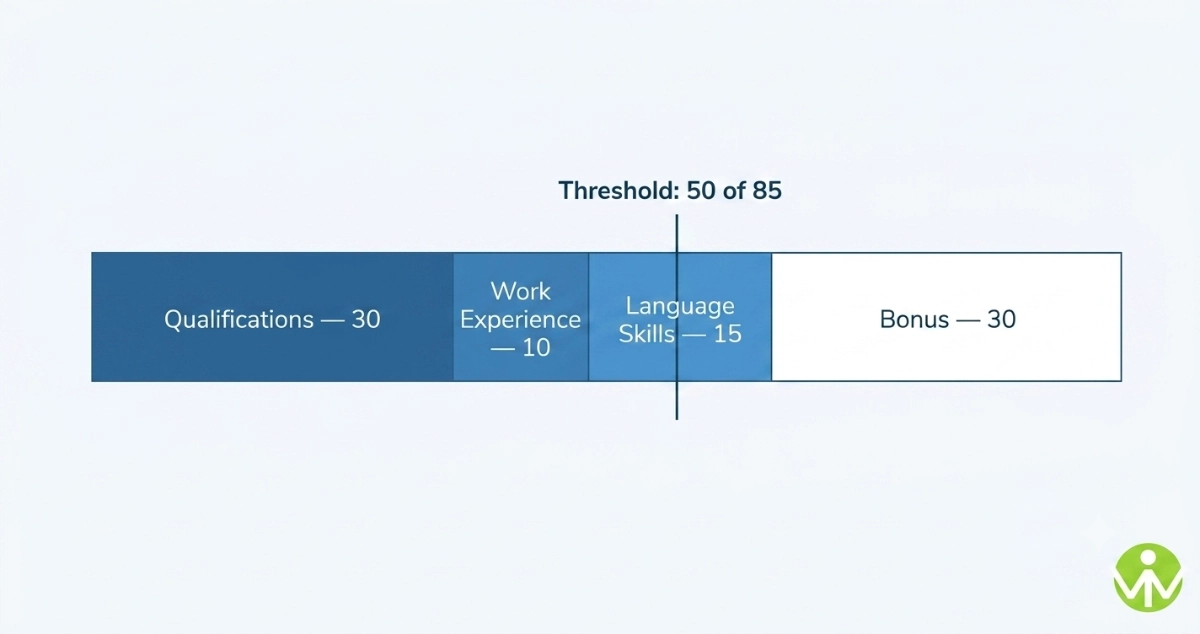
- You need 50 of a possible 85 points, spread across qualifications (up to 30), work experience (up to 10), language skills (up to 15) and bonus criteria (up to 30).
- Work experience is scored per half-year: 1 point every six months, capped at 10.
- The card is valid for 24 months; renewal typically moves founders onto the Red-White-Red Card Plus, with unrestricted labour-market access.
- Applications go to an Austrian embassy or consulate and typically take around 8 weeks.
Table of Contents
What Is Red-White-Red Card Austria for Start-Up Founders?
The Red-White-Red Card is Austria’s main immigration status for skilled non-EU/EEA nationals, and the start-up founder category is one of several routes into it. This route is aimed specifically at people who want to found and run an innovative company in Austria, rather than take up paid employment for someone else. The card grants both a residence permit and the right to work in the business named on the application — not in any other job, which is what separates it from the general skilled-worker categories of the Red-White-Red Card. The full legal criteria are set out by migration.gv.at, Austria’s official immigration portal, which this guide follows throughout.
Red-White-Red Card Austria Eligibility: Capital, Equity and Business Plan
To qualify as a start-up founder, you need to:
- Bring at least €30,000 in capital to the company being founded, and hold at least 50% of its equity personally.
- Present a business plan for a product or service that is genuinely innovative — not a local franchise or reseller model.
- Keep effective control of the company; a majority shareholder who takes no part in management doesn’t qualify.
- Score at least 50 of the 85 points available (below).
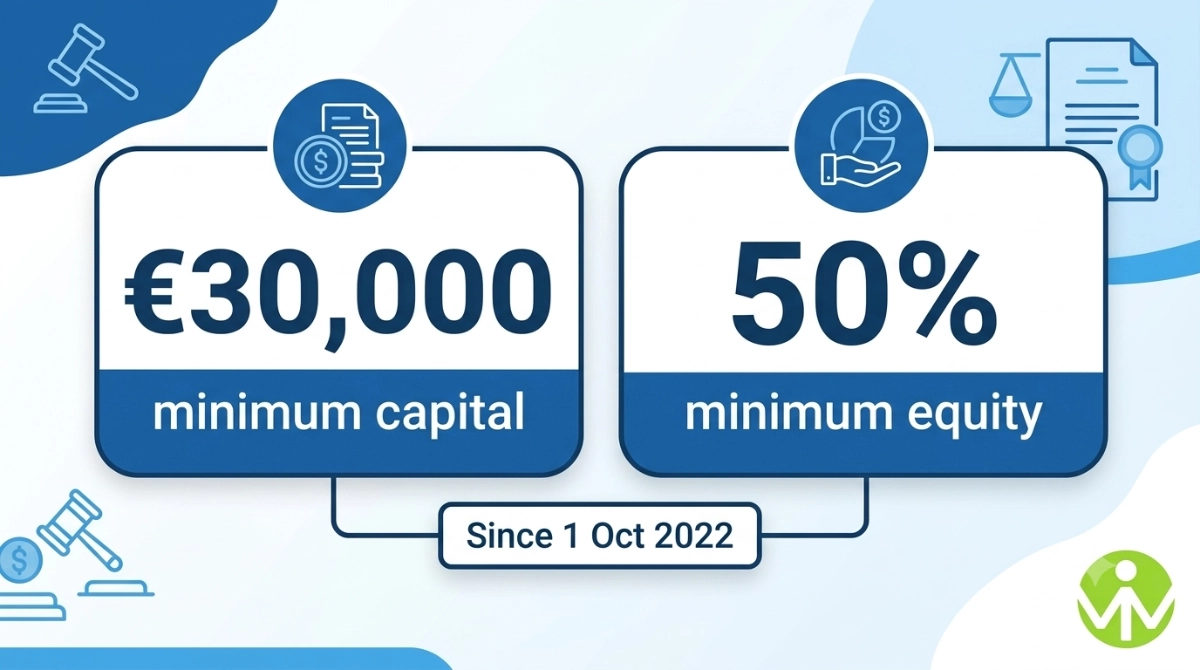
Until 1 October 2022, the Red-White-Red Card Austria capital requirement was €50,000 — a third higher than today’s figure. It hasn’t gone back up since, and any source still quoting €50,000 is describing a rule that stopped applying more than three years ago.
How This Differs from the Self-Employed Key Worker Route
Austria also runs a separate self-employed key worker permit for founders who’d rather skip the points assessment entirely. It asks for a larger capital transfer — at least €100,000 into the Austrian economy — but has no points system at all. If your qualifications, experience, or language skills won’t reach 50 points but you can commit to a larger sum, that route may suit you better than the one this page covers.
The Red-White-Red Card Austria Points System: 85 Points Explained
Austria scores every start-up founder application against four categories, each with its own cap. The four caps add up to a maximum of 85 points, and a founder needs at least 50 to qualify — which means it’s possible to clear the bar without maxing out a single category, as the worked example below shows.
Qualifications — Up to 30 Points
Table 1 — Qualifications
| Qualification | Points |
|---|---|
| Completed vocational training or documented specialised skills relevant to the business | 20 |
| Completed tertiary education programme of at least three years | 20 |
| Austrian secondary school diploma (Matura), or a Bachelor’s, Master’s or Doctoral degree | 30 |
| Only your highest-scoring qualification counts in this category — the three rows are alternatives, not additive. | |
Work Experience — Up to 10 Points
Table 2 — Work Experience
| Requirement | Points |
|---|---|
| Relevant work experience, per completed six months | 1 point (up to 10) |
| Ten points is the maximum for this category, reached at five years of relevant work experience. | |
Language Skills — Up to 15 Points
Table 3 — Language Skills
| Language and Level | Points |
|---|---|
| German, A2 | 5 |
| German, B1-B2 | 10 |
| German, C1-C2 | 15 |
| English, B2 | 10 |
| French, Spanish, Bosnian, Croatian or Serbian, B1 | 5 |
| Fifteen points is the maximum for this category; your highest-scoring language and level combination counts, not the sum of several rows. | |
Bonus Criteria — Up to 30 Points
Table 4 — Bonus Criteria
| Criterion | Points |
|---|---|
| Additional investment capital of EUR 50,000 or more | 10 |
| Business plan admitted to a recognised Austrian start-up incubator, or funded by a start-up support agency | 10 |
| Founder aged 35 or under | 10 |
| All three bonus criteria can apply at once, up to the 30-point cap. | |
Worked Example: Red-White-Red Card Austria Points in Practice
Jordan Reyes is a 33-year-old software engineer planning to found a data-analytics company in Vienna. Jordan brings €30,000 in capital — the minimum required — and holds 55% of the company’s equity, clearing the Red-White-Red Card Austria capital gate outright. Here is how Jordan’s points build up:
Table 5 — Worked Example Running Total
| Category | Jordan’s score | Running total |
|---|---|---|
| Qualifications: Jordan holds a Master’s degree | 30 | 30 |
| Work experience: 3 years in the field (six completed half-years) | 6 | 36 |
| Language skills: German at B1 level | 10 | 46 |
| Bonus: under 35, and the business plan has been admitted to an Austrian start-up incubator | 20 | 66 |
| 66 of 85 points – 16 clear of the 50-point threshold. | ||
Jordan’s case shows why Red-White-Red Card Austria’s points system rewards a rounded application over a single strong category: no single score here is maxed out, and the total still clears the threshold with room to spare.
Red-White-Red Card Austria Fees and Application Timeline
Applications for Red-White-Red Card Austria as a start-up founder go to an Austrian embassy or consulate in the applicant’s country of residence, not to an office inside Austria. Processing typically takes around eight weeks from a complete application, though this varies by mission and case complexity.
Table 6 — Fees
| Fee | Amount |
|---|---|
| Application fee | EUR 120 |
| Card issuance (granting) fee | EUR 20 |
| Personalisation (fingerprints, photo, signature) | EUR 20 |
| Total government fees: EUR 160, in addition to any translation, certification or business-plan costs. | |
After 24 Months: Red-White-Red Card Austria Renewal and the Plus Card
The Red-White-Red Card for start-up founders is valid for up to 24 months. Renewal typically moves founders onto the Red-White-Red Card Plus, which drops the restriction to a single business and gives unrestricted access to the Austrian labour market — useful if the venture doesn’t work out and the founder wants paid employment instead, or simply wants the flexibility.
How Red-White-Red Card Austria Compares to Other Startup Visa Countries
Austria’s €30,000 capital requirement sits toward the lower end of Europe’s start-up visa routes; see our full startup visa by country comparison for how it stacks up against schemes elsewhere. If a points-based route doesn’t suit your background, Austria’s self-employed key worker permit trades the points assessment for a larger capital transfer, and our guide to different types of visas to Austria covers the country’s other residence and work routes, including ways to immigrate to Austria more broadly.
Denmark takes the opposite approach to a capital test: Startup Denmark requires no minimum investment, but caps the scheme at 75 permits a year and requires an expert panel to approve the business plan before it considers the immigration application. Estonia’s startup route works like Denmark’s rather than Austria’s: there is no capital test, and an expert Startup Committee rules on the business within 10 working days, as our Estonian startup visa guide explains.
Red-White-Red Card Austria FAQ
What is the minimum investment for Austria’s start-up founder visa?
You need at least €30,000 in capital for the company, with at least 50% of that equity held by you personally. This has been the rule since 1 October 2022, when it replaced a €50,000 minimum.
How many points do I need for Red-White-Red Card Austria?
50 points out of a possible 85, spread across qualifications (up to 30), work experience (up to 10), language skills (up to 15) and bonus criteria (up to 30).
Does work experience alone get me to 50 points?
No. Work experience caps at 10 points, reached after five years of relevant experience at one point per completed six months. You’ll need points from at least one other category — most applicants combine a qualification, a language score and at least one bonus criterion.
What happens after the card’s first 24 months?
Most founders renew into the Red-White-Red Card Plus, which drops the restriction to your own business and gives unrestricted access to the Austrian labour market.
Is this the same as Austria’s self-employed key worker permit?
No. The self-employed key worker route asks for a larger capital transfer — at least €100,000 — and has no points system at all. Red-White-Red Card Austria’s start-up founder route asks for less capital but requires clearing the 50-point threshold.
Where do I apply, and how long does it take?
Applications go to an Austrian embassy or consulate, not an office inside Austria, and typically take around eight weeks from the time of complete submission.