
The Canadian Start-Up Visa is closed to new applicants, and the replacement Immigration, Refugees and Citizenship Canada (IRCC) promised still hasn’t appeared. If you are researching the Canadian Start-Up Visa in the hope of applying, this guide sets out where the program actually stands in September 2026: what IRCC has confirmed about the entrepreneur pilot meant to succeed it, what is only expectation dressed up as news, and which routes remain open to founders in the meantime.
Table of Contents
Key Takeaways
- The Canadian Start-Up Visa is closed to new applicants. The commitment-certificate deadline (December 31, 2025) and the application deadline (June 30, 2026) have both passed.
- IRCC announced a replacement “targeted pilot program for immigrant entrepreneurs” on December 19, 2025 and said details would follow in 2026. As of September 3, 2026 nothing has been published — no eligibility criteria, no cap, no opening date.
- The widely repeated expectations — priority for founders already in Canada on work permits, high-growth sectors, invitation-based selection — come from immigration-industry commentary, not from IRCC.
- The 2026–2028 Immigration Levels Plan halves the Federal Business admissions target for 2026, from 1,000 to 500 a year. That line covers the Start-up Visa and Self-employed Persons programs together, not the new pilot alone.
- IRCC has published no backlog figure. Reported estimates run from 42,200 to 43,200 cases and do not trace to a government release.
- The work-permit-while-you-wait stream stopped accepting new applications on December 19, 2025, though existing permit holders may still be able to extend.
- Quebec runs its own investor and entrepreneur streams, which the federal pause does not affect.
- Express Entry and Provincial Nominee Program business streams remain the practical alternatives while the pilot is unpublished.
Current Status: The Canadian Start-Up Visa Is Closed
According to IRCC, the Start-up Visa Program is closed to all new applications outside one narrow exception. To apply, an entrepreneur needed a valid 2025 commitment certificate and had to submit the application by June 30, 2026. Both of those dates have passed. Designated organizations — the venture capital funds, angel investor groups and business incubators that support applicants — had until December 31, 2025 to submit a commitment certificate on an entrepreneur’s behalf.
One wording point is worth noting, because it shapes how the Canadian Start-Up Visa is likely to be reported over the next year. IRCC’s own program page carries the status label “Paused” rather than “closed”. For anyone hoping to apply today the two words mean the same thing. The difference is that a pause leaves the department’s options open, and the page has not been substantively revised since July 21, 2026.
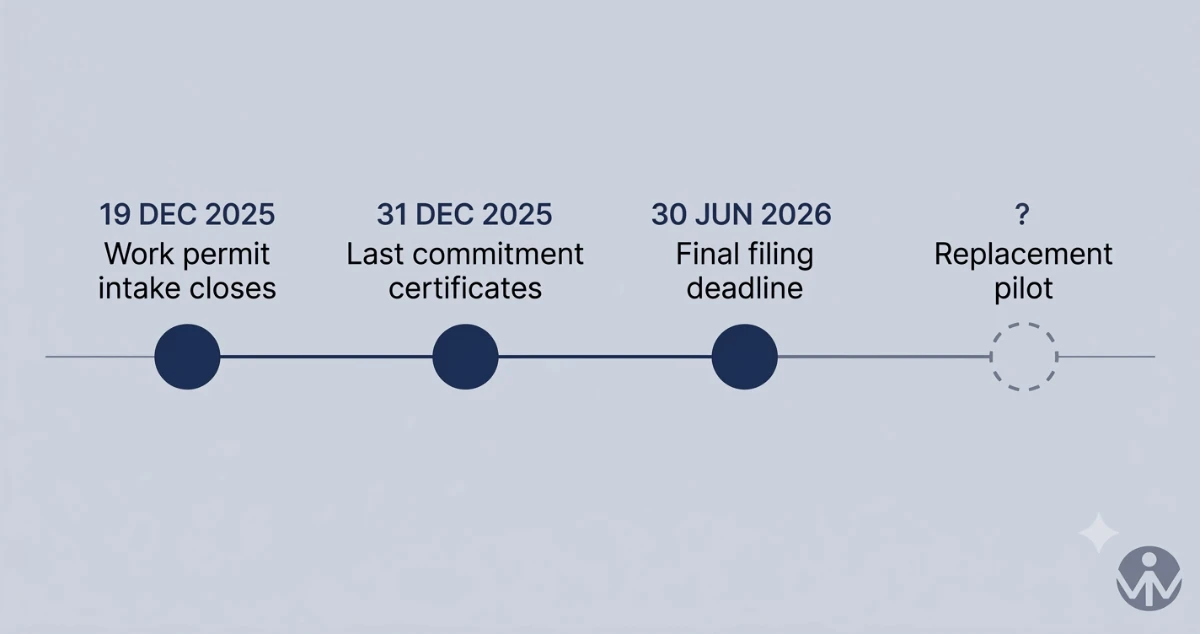
Table 1: Canadian Start-Up Visa — program milestones
| Milestone | Date | Status as of 3 September 2026 |
|---|---|---|
| Last day for designated organizations to submit a commitment certificate | December 31, 2025 | Passed |
| Work permit while you wait — last day accepting new applications | December 19, 2025 | Passed — stream closed to new applicants |
| Deadline to apply with a valid 2025 commitment certificate | June 30, 2026 | Passed |
| New applications without a valid 2025 commitment certificate | N/A | Not accepted — program closed to all other applications |
| Replacement entrepreneur pilot opens | Not published | No eligibility criteria, cap or opening date announced |
| Sources: IRCC, Start-up Visa Program page (last modified 21 July 2026) and Update on Immigration Measures for Entrepreneurs (19 December 2025). Status verified 3 September 2026. | ||
The Replacement Entrepreneur Pilot: What Is Known
The closure was never presented as the end of federal entrepreneur immigration. It was presented as a clearing of the decks. Nine months on, the decks are clear and nothing has replaced the Canadian Start-Up Visa — which is why the honest way to write this section is to separate what the government has actually said from what the industry expects it to say.

What IRCC has confirmed about the Canadian Start-Up Visa replacement
The confirmed record is short. In its notice Update on Immigration Measures for Entrepreneurs, published on December 19, 2025, IRCC said it had stopped accepting Start-Up Visa work permit applications that day, apart from extensions for holders already in Canada; that it would stop accepting new permanent residence applications after December 31, 2025, apart from applicants holding a 2025 commitment; and that the pause on the Self-Employed Persons Program was extended until further notice. It described these steps as setting the foundation for a transition to a new, targeted pilot program for immigrant entrepreneurs, and said more information would be communicated in 2026.
That is the whole of it. As of September 3, 2026, more than eight months later, IRCC has published no eligibility criteria, no cap, no opening date and no application process. Neither the Canadian Start-Up Visa program page nor IRCC’s application processing system page (last modified August 18, 2026) mentions the pilot at all.
IRCC has also never published how many applications sit in the queue behind the closure. Reported estimates run from 42,200 applications including dependents to 43,200 cases as at October 2025, depending on which outlet you read. Neither figure traces to a government release, so the scale is best treated as indicative rather than official.
What is expected but not confirmed
Almost everything else circulating about the pilot is inference. Three expectations recur across immigration-industry commentary, and all three are plausible readings of the department’s direction of travel.
- Priority for entrepreneurs already in Canada on valid work permits, rather than applicants offshore.
- A focus on sectors judged to offer significant economic benefit and high growth potential, replacing the volume-based approach the Canadian Start-Up Visa was criticised for.
- Selection by invitation, in the manner of Express Entry, rather than the effectively guaranteed processing that a letter of support used to secure.
None of these appears in any IRCC publication. They may well prove right. But a founder building a plan around them today is building it around commentary, not policy, and the distinction matters most to the people with the least room to absorb a wrong guess.

Table 2: The replacement entrepreneur pilot — confirmed against expected
| Element | What IRCC has confirmed | What is expected but unconfirmed |
|---|---|---|
| A pilot exists | A “new, targeted pilot program for immigrant entrepreneurs” was announced on 19 December 2025 | — |
| Opening date | None published. IRCC said only that more information would be communicated in 2026 | Commentary anticipated a 2026 opening; nothing as of 3 September 2026 |
| Eligibility criteria | None published | Priority for entrepreneurs already in Canada on valid work permits |
| Target sectors | None published | Sectors with significant economic benefit and high-growth potential, rather than volume |
| Selection method | None published | Selection by invitation, in the manner of Express Entry |
| Annual places | None published for the pilot | No pilot-specific figure exists; the Federal Business category target is 500 admissions a year |
| Application backlog | No figure published by IRCC | Reported at 42,200–43,200 cases, depending on the outlet |
| Confirmed column sourced from IRCC’s notice of 19 December 2025 and its Start-up Visa Program page. Expected column reflects immigration-industry commentary, not government statements. As of 3 September 2026. | ||
What the Levels Plan implies about the size of a Canadian Start-Up Visa successor
There is one hard number, and it does not come from the pilot announcement at all. The 2026–2028 Immigration Levels Plan sets the Federal Business category at 500 admissions a year for 2026, 2027 and 2028, within a range of 250 to 1,000. The 2025–2027 plan it replaced had set 2026 at 1,000, within a range of 200 to 2,000. On a like-for-like basis, the target for 2026 has been halved.
Two cautions before that figure gets read as the pilot’s size. Federal Business counts admissions from the Start-up Visa Program and the Self-employed Persons Program together, so it is not a cap on anything the pilot might offer. And admissions count people landing as permanent residents in a given year, most of whom applied long before. For now, the 500 mostly describes the rate at which the existing queue will be worked through — a constraint on the pilot’s likely ambition rather than a measurement of it.
Table 3: Federal Business admissions target, 2025–2027 plan against 2026–2028 plan
| Immigration Levels Plan | 2025 | 2026 | 2027 | 2028 |
|---|---|---|---|---|
| 2025–2027 plan | 2,000 (1,200–3,000) | 1,000 (200–2,000) | 1,000 (200–2,000) | — |
| 2026–2028 plan | — | 500 (250–1,000) | 500 (250–1,000) | 500 (250–1,000) |
| Figures are the admissions target, with the low–high range in brackets. The Federal Business category includes admissions from the Start-up Visa Program and the Self-employed Persons Program. Sources: IRCC supplementary information for the 2025–2027 and 2026–2028 Immigration Levels Plans. | ||||
Who Can Still Apply for the Canadian Start-Up Visa
In practice, almost nobody. The only route into the Canadian Start-Up Visa required a valid 2025 commitment certificate obtained before the designated-organization deadline, followed by an application before June 30, 2026. Entrepreneurs who secured a commitment certificate and applied inside that window should keep tracking their case through IRCC’s normal processing channels. Entrepreneurs without a 2025 commitment certificate cannot apply under this program in its current form, and no interim arrangement has been announced for them.
What Happens If You Already Hold a Canadian Start-Up Visa Work Permit
Entrepreneurs already holding a temporary work permit issued under the Canadian Start-Up Visa’s “work permit while you wait” stream may be able to extend that permit while their permanent residence application continues processing. Immigration, Refugees and Citizenship Canada has not accepted new applications for the stream since December 19, 2025. For the current rules on employer-specific versus open work permits generally, see our guide to getting a work permit for Canada.
Alternatives for Entrepreneurs While the Canadian Start-Up Visa Is Paused
With the federal program shut and its successor unpublished, entrepreneurs have a few routes worth weighing. Founders willing to look beyond Canada can compare every scheme still open in our guide to the startup visa by country.
Quebec’s Investor and Entrepreneur Streams
Quebec administers its own immigration system, separate from the Canadian Start-Up Visa and the federal machinery around it, and its investor and entrepreneur streams are unaffected by the federal pause. Quebec sets its own eligibility criteria and investment thresholds, which should be confirmed directly with Quebec’s immigration ministry rather than assumed to mirror the federal program’s historical figures.
Express Entry and Provincial Nominee Business Streams
Entrepreneurs with strong skilled work experience may still qualify for permanent residence through Express Entry, and several provinces run entrepreneur or business streams under the Provincial Nominee Program, independent of the Canadian Start-Up Visa. For a fuller comparison of routes to permanent residence, see our guide to the different ways to get permanent residency in Canada, or our complete guide to the types of Canadian visas for an overview of every current category. The wider policy backdrop — tighter targets, stricter checks — is covered in our summary of Canada’s new immigration rules.
Historical Eligibility Criteria (For Reference)
The following reflects how the Canadian Start-Up Visa worked before it closed to new applicants. It is kept here for entrepreneurs already in the pipeline, for researchers, and because any replacement will be judged against it — not as a currently available pathway.
Eligibility centred on four requirements: a qualifying business (up to five owners, with the applicant holding at least 10% of voting rights and the applicant plus the designated organization holding at least 50%); a letter of support from a designated venture capital fund, historically requiring a CAN$200,000 investment, an angel investor group at CAN$75,000, or a business incubator accepting the founder into its program; proof of language ability in English or French; and proof of settlement funds sized to family size. Applicants also needed police and medical clearances among a range of supporting documents, and processing historically took up to 18 months — the delay that, more than any other factor, is what the closure was meant to address.
Frequently Asked Questions
Will the Canadian Start-Up Visa reopen?
Not in its old form. IRCC has said it is transitioning to a new, targeted pilot program for immigrant entrepreneurs, which implies a replacement rather than a restart of the Canadian Start-Up Visa as it was. As of September 3, 2026 that pilot has no published criteria, cap or opening date, and IRCC’s program page still shows the old route as paused rather than cancelled. Anyone waiting should watch IRCC’s Start-up Visa Program page and its newsroom rather than secondary coverage.
When will the new entrepreneur pilot launch?
No date has been announced. IRCC said in December 2025 that more information would be communicated in 2026; three-quarters of the way through the year, nothing has been. Treat any specific launch date you see quoted as speculation unless it links to a canada.ca page.
Is the Canadian Start-Up Visa still open in 2026?
No. The only path in required a valid 2025 commitment certificate and an application submitted by June 30, 2026, and both windows have passed. IRCC lists the program as paused and is not accepting new applications.
What happens to my application if I already hold a 2025 commitment certificate?
If you obtained a valid 2025 commitment certificate and filed before the June 30, 2026 deadline, your application should continue processing normally. Check status through your IRCC account, and expect timelines to remain long: reducing the existing inventory is the stated reason the intake was closed.
Can I still get a work permit while my Canadian Start-Up Visa PR application is processing?
If you already hold a work permit issued under the program, you may be able to extend it while your permanent residence application is processed. New applications for this work-permit stream have not been accepted since December 19, 2025.
What are the alternatives to the Canadian Start-Up Visa for entrepreneurs?
Quebec’s separate investor and entrepreneur streams, Express Entry for founders with qualifying skilled work experience, and Provincial Nominee Program business or entrepreneur streams run by individual provinces. Founders open to other countries have a wider choice, several of which are still accepting applications.
Does Quebec have its own start-up or investor visa?
Yes. Quebec runs its own investor and entrepreneur immigration streams independently of the federal government, and the federal pause does not affect them, though Quebec sets its own criteria and thresholds.
The Bottom Line
The Canadian Start-Up Visa is shut, and the pilot meant to replace it exists only as a sentence in a nine-month-old notice. Everything more specific circulating about it — who it will favour, which sectors, how founders will be selected — is commentary rather than policy. The one firm signal is the Levels Plan, and it points to a smaller federal business programme rather than a larger one. Until IRCC publishes something, Quebec’s streams, Express Entry, and the provincial business routes are what are actually available, and founders with the flexibility to look abroad should compare them against schemes that are open today.