
The H-1B visa changes introduced between January 2025 and August 2026 have altered almost every stage of the process: how petitions are selected, what they cost, who must attend an interview, and how long dependants can remain employed. Several of the most widely reported measures, however, either never took effect or have since been struck down in court.
That gap between what was announced and what is actually being enforced is now the biggest single source of confusion for applicants. This page sets out the H-1B visa changes that apply as at August 2026, the ones that are still only proposals, and the parts of the programme that have not moved at all. For the underlying eligibility rules, cap mechanics and application steps, see our full H-1B visa guide.
| Key Takeaways |
| Selection is no longer random. A wage-weighted lottery replaced the random draw on 27 February 2026 and ran for the first time in the FY2027 cap season. |
| FY2027 registrations fell by more than a third, and selections shifted sharply towards higher wage levels and US advanced degrees. |
| The $100,000 payment announced in September 2025 has been vacated by a federal court and is not being collected. It remains under appeal. |
| A $4,000 fee that previously applied only to new and change-of-employer petitions extends to same-employer extensions from 9 September 2026. |
| Most H-1B applicants must now attend an in-person interview. The interview waiver route closed to H-1B on 1 October 2025. |
| The 85,000 annual cap, the speciality occupation test and the six-year limit are unchanged, and several widely reported H-1B visa changes never took effect at all. |
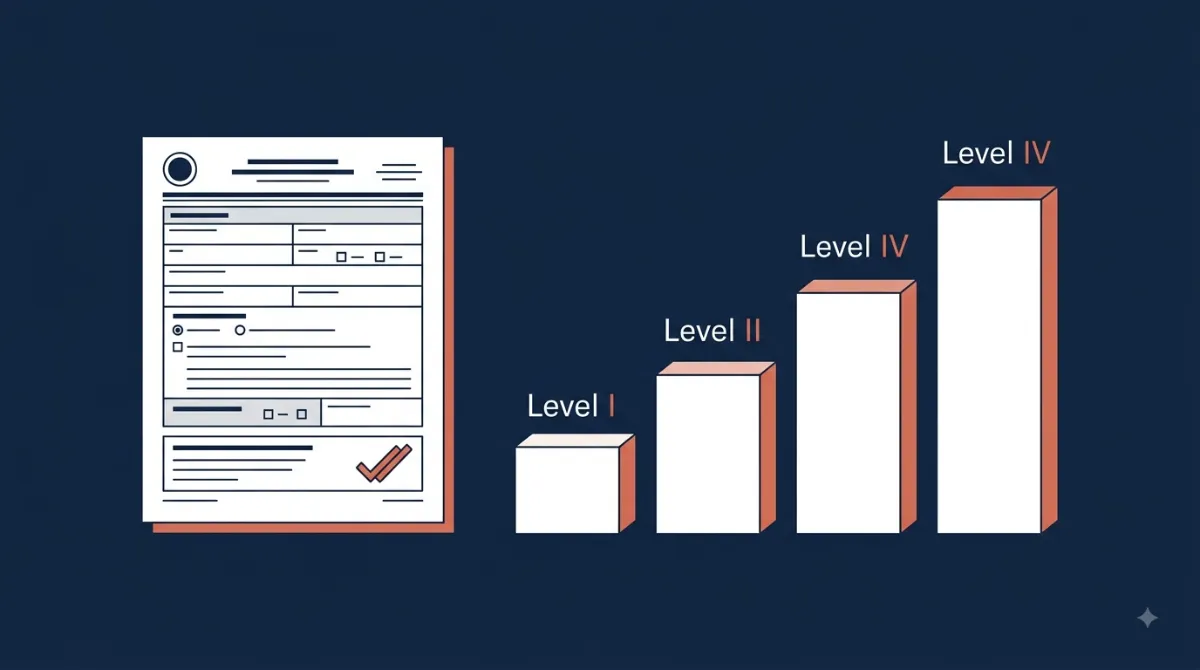
Table of contents
The H-1B visa changes that now apply
Eleven measures account for nearly all of the practical H-1B visa changes now in force. They arrived from three different directions — a Department of Homeland Security rulemaking programme, a State Department tightening of consular practice, and a set of fee provisions written into statute — which is why they share no single effective date and why several overlap awkwardly.
The table below groups these H-1B visa changes by what they affect and when each took, or takes, effect.
| Change | Effective | Affects | Status |
|---|---|---|---|
| Degree must be directly related to the duties of the role | 17 January 2025 | Eligibility | In force |
| Cap-gap protection extended to 1 April of the relevant fiscal year | 17 January 2025 | F-1 students | In force |
| Deference to prior approvals codified | 17 January 2025 | Extensions | In force |
| Interview waiver narrowed; H-1B excluded | 1 October 2025 | Visa stamping | In force |
| $250 visa integrity fee at visa issuance | 1 October 2025 | Applicants | In force; collection uneven, no refund mechanism yet |
| Automatic extension of expiring EADs on renewal ends | 30 October 2025 | H-4 dependants | In force |
| EAD validity cut from five years to 18 months | 5 December 2025 | H-4 dependants | In force |
| Wage-weighted selection replaces the random draw | 27 February 2026 | Lottery | In force; first used for FY2027 |
| Premium processing rises from $2,805 to $2,965 | 1 March 2026 | Processing times | In force |
| $4,000 fee extended to same-employer extensions | 9 September 2026 | Covered employers | Final rule published 10 August 2026 |
| $100,000 payment under Proclamation 10973 | September 2025 | Certain new petitions from abroad | Vacated; not being collected; under appeal |
| Table 1: H-1B visa changes and their status as at August 2026 | |||
H-1B visa changes to the lottery: selection is no longer random
For the whole of the programme’s modern history, an oversubscribed cap was resolved by random draw. Every registration carried the same chance regardless of the job, salary, or candidate. That ended with a final rule published on 29 December 2025 and effective 27 February 2026.
Under weighted selection each registration receives entries according to the Occupational Employment and Wage Statistics (OEWS) wage level that the offered salary corresponds to. A Level IV role receives four entries, Level III three, Level II two and Level I one. The registration fee stays at $215, regardless of wage level; what changes is how many times that registration sits in the pool. The same weighting applies to the 20,000-place master’s cap.
The practical effect is that these H-1B visa changes disqualify nobody. A Level I registration can still be selected. But a Level IV registration is now four times as likely to be selected, and the salary an employer attaches to the role has become the most important variable an applicant cannot directly control.
What the first weighted lottery showed
FY2027 was the first cap season run under the new system. Registration ran from 4 to 19 March 2026, selection completed on 31 March, and the filing window closed on 30 June. USCIS confirmed on 17 July 2026 that the cap had been reached, with no second round.
Two results stand out. Registration volume fell by well over a third, which suggests employers self-selected out rather than pay $215 for a lightly weighted entry. And the composition of selections shifted: reporting on USCIS figures puts roughly 71.5% of selected beneficiaries as holding US advanced degrees, up from about 57% a year earlier, with only around 17.7% of selections falling in the lowest wage band.
| Measure | FY2026 | FY2027 |
|---|---|---|
| Selection method | Random draw | Wage-weighted (OEWS Levels I-IV) |
| Eligible registrations | 343,981 | About 211,600 |
| Unique beneficiaries | 336,153 | Not separately confirmed |
| Registrations selected | 120,141 | Not published |
| Selected holding a US advanced degree | About 57% | About 71.5% |
| Selections at the lowest wage level | Not published | About 17.7% |
| Second selection round | None | None |
| Cap confirmed reached | Not applicable | 17 July 2026 |
| Table 2: The H-1B lottery before and after weighted selection | ||
H-1B visa changes to fees and who pays them
Fees are where the H-1B visa changes have been most volatile, and where the most inaccurate figures circulate. Three points are worth fixing before looking at the numbers. First, the $215 registration fee and the $100,000 payment announced in 2025 are entirely separate charges, not one fee that rose. Second, the base I-129 petition fee is $780 for most employers — the frequently quoted $460 applies only to small employers and non-profits. Third, the statutory fees are the employer’s responsibility, and an employer cannot lawfully pass the ACWIA training fee or the fraud fee to the worker.
| Fee | Amount | Paid by | When it applies |
|---|---|---|---|
| Electronic registration | $215 | Employer | Per registration during cap season |
| Form I-129 petition | $780 ($460 for small employers and non-profits) | Employer | All H-1B petitions |
| Asylum Program Fee | $600 ($300 small employers; $0 non-profits) | Employer | All H-1B petitions |
| ACWIA training fee | $1,500 ($750 if 25 or fewer employees) | Employer | New petitions and extensions; non-profits exempt |
| Fraud prevention and detection | $500 | Employer | New petitions and change of employer |
| 9-11 Response and Biometric Entry-Exit | $4,000 | Employer | Covered employers; same-employer extensions from 9 September 2026 |
| Premium processing (optional) | $2,965 | Employer or worker | Optional 15 business day adjudication |
| Visa integrity fee | $250 | Applicant | On visa issuance at a consulate |
| Proclamation 10973 payment | $100,000 | Employer | Vacated; not being collected as at August 2026 |
| Table 3: H-1B fees as at August 2026 | |||
The $100,000 payment, and why it is not being collected
Proclamation 10973, signed in September 2025, required a $100,000 payment in connection with certain new H-1B petitions for people outside the United States. It is the single most misreported item in this area, and it is not currently being collected.
The District of Massachusetts vacated the implementing policy on 8 June 2026. The court briefly reinstated it on 12 June while an appeal was pending, but the First Circuit declined to maintain that stay on 24 July 2026, thereby restoring the vacatur. A parallel case in the District of Columbia reached a different conclusion, so a split exists and the government may still seek Supreme Court intervention. Separately, the proclamation is itself due to expire on 20 September 2026 unless extended or reissued.
Applicants should treat this as live litigation rather than settled law. Of all the H-1B visa changes on this page it is the one most likely to move again.
The $4,000 fee expands on 9 September 2026
A $4,000 9-11 Response and Biometric Entry-Exit fee has long applied to a narrow class of employers: those with 50 or more US employees, in which more than half hold H-1B or L-1 status. Until now, it attached only to new petitions and change-of-employer filings, and routine extensions with the same employer were exempt.
A DHS final rule published in the Federal Register on 10 August 2026 removes that exemption. From 9 September 2026 covered employers owe the $4,000 fee on same-employer extension petitions as well. Amended petitions that do not request an extension of status stay outside it. This is a narrow rule by headcount but a heavy one for the staffing and IT services firms it targets, and it applies to petitions filed on or after the effective date.
H-1B visa changes to interviews and visa stamping
The interview waiver, widely known as the dropbox, allowed many applicants renewing a visa to submit documents without appearing in person. Successive State Department notices narrowed it through 2025, and from 1 October 2025 the waiver categories were cut back to diplomatic and official classifications, B-1/B-2 and border crossing card renewals within twelve months, and H-2A agricultural renewals.
H-1B is not on that list. Of all the H-1B visa changes in this period, this is the one most applicants feel directly: most people renewing an H-1B visa abroad now attend an in-person interview, which in practice means longer waits at busy consular posts and more risk in scheduling travel. Consular officers may also require an interview in any individual case at their discretion.
A separate $250 visa integrity fee, created by legislation in July 2025, applies to most nonimmigrant visas issued on or after 1 October 2025. Collection has been uneven across posts, and the refund mechanism contemplated by the statute is not yet operational.
H-1B visa changes affecting families and work authorisation
Two points are frequently conflated here. The H-4 EAD rule, which lets certain H-4 spouses work, was not rescinded — the Supreme Court declined to hear the challenge to it on 14 October 2025. What did change is renewal mechanics. The automatic extension that carried an expiring EAD while a renewal was pending ended for filings made on or after 30 October 2025, so a spouse whose renewal is not adjudicated before the current card expires must now stop working.
Separately, EAD validity was cut from five years to eighteen months as of 5 December 2025, which means more frequent renewals against the same lost cushion. Our guides to H-4 EAD work authorisation and the shortened work permit validity cover both in detail.
H-1B visa changes for students moving from F-1
For students, the H-1B visa changes interact with a separate set of rules on student status. The H-1B modernisation rule extended cap-gap protection to 1 April of the relevant fiscal year, which materially reduces the risk of a gap between the end of OPT and the start of H-1B employment.
Pulling the other way, duration of status ends for F-1, J-1 and I visa holders from 15 September 2026, replacing open-ended admission with fixed end dates. Anyone planning an H-1B route from study should read the end of duration of status rules alongside the current OPT rules.
What the H-1B visa changes did not touch
It matters just as much to know what has held steady. The annual cap remains 65,000 places plus 20,000 reserved for US master’s graduates. The speciality occupation standard, the requirement for a sponsoring employer, the three-year initial validity extendable to six years, and the AC21 provisions allowing extensions beyond six years where a green card process is underway are all unchanged. Cap-exempt employers — universities, affiliated non-profits and qualifying research organisations — remain outside the lottery entirely and can petition at any time of year. Nothing in the 2026 changes altered the H-1B to green card route itself — the PERM, I-140 and adjustment stages, and the queues behind them, work exactly as they did before.
Applicants who cannot rely on the cap may find one of the alternatives to the H-1B visa a more reliable route.
H-1B visa changes still in the pipeline
Three items are proposed rather than in force and should not be planned around.
DHS sent a proposal to eliminate the 60-day grace period following termination to the White House for regulatory review on 8 August 2026. It has not been published for comment. If it were finalised, workers on H-1B and several other employment categories would lose the window currently used to find a new sponsor after a layoff.
A broadened biometrics collection proposal was published on 3 November 2025 with comments closing on 2 January 2026. It has not been finalised.
And the $100,000 payment litigation described above could revive that charge if an appellate court or the Supreme Court rules for the government.
What the H-1B visa changes mean in practice
For candidates, the salary attached to the offer now matters more than any other single factor, because it sets the lottery weighting. For employers, the cost of a cap case has risen, and for the largest H-1B-dependent firms extensions stop being cheap in September. For everyone, interview planning needs materially more lead time than it did two years ago.
The most useful posture is to separate the H-1B visa changes that are actually enforced from those that are merely announced, proposed or contested — a distinction that most coverage of this area does not make clearly.
Frequently Asked Questions
Do I have to pay the $100,000 H-1B fee?
Not as at August 2026. Of all the H-1B visa changes announced in the past year this is the most misreported. A federal court vacated the policy implementing the $100,000 payment on 8 June 2026, and the First Circuit declined to stay that ruling on 24 July 2026, so the charge is not being collected. The government’s appeal continues and the position could change.
Does the weighted lottery mean a Level I job cannot be selected?
No. Weighted selection changes the odds, not eligibility. A Level I registration receives one entry and can still be selected; a Level IV registration receives four. In the first year under the new system, about 17.7% of selections still fell in the lowest wage band.
Who pays the $4,000 fee — the employer or the worker?
The employer. The 9-11 Response and Biometric Entry-Exit fee is a statutory employer cost and applies only to employers with 50 or more US staff of whom more than half hold H-1B or L-1 status. From 9 September 2026 it also applies when those employers file same-employer extensions.
Do I still need to attend an H-1B visa interview?
In most cases, yes. H-1B was removed from the interview waiver categories from 1 October 2025, so applicants renewing abroad should plan for an in-person appointment and allow for consular wait times.
Do the H-1B visa changes affect people who already hold an H-1B?
Some do. Existing holders are unaffected by the lottery changes but are exposed to the interview requirement when renewing a visa abroad, to the $4,000 fee if their employer is a covered employer filing an extension from 9 September 2026, and to the H-4 EAD renewal changes if a spouse works.
Has the 60-day grace period after a layoff been removed?
No. A proposal to eliminate it went to the White House for regulatory review on 8 August 2026, but it has not been published for public comment and is not law. The 60-day grace period still applies.